Egypt’s real estate market entered 2026 with greater discipline after several years of rapid expansion. Egypt’s top developers posted EGP 271 billion in sales in the first quarter of 2026 alone, with East Cairo generating roughly EGP 130 billion and the North Coast contributing around EGP 50 billion. That scale of activity means hundreds of projects are launching across New Cairo, the North Coast, and the New Administrative Capital at the same time, many of them with similar architecture, similar payment plans, and similar promises.
Good design and a strong location are no longer enough on their own. When a buyer compares five projects that all look and sound the same, the developer with a real brand behind them wins the sale before the first site visit even happens. This guide covers what real estate branding actually means for Egyptian developers, how it differs from branding a single project, and how to build one that holds up as your company grows.
Real estate branding in Egypt
Why real estate branding matters more than ever in Egypt
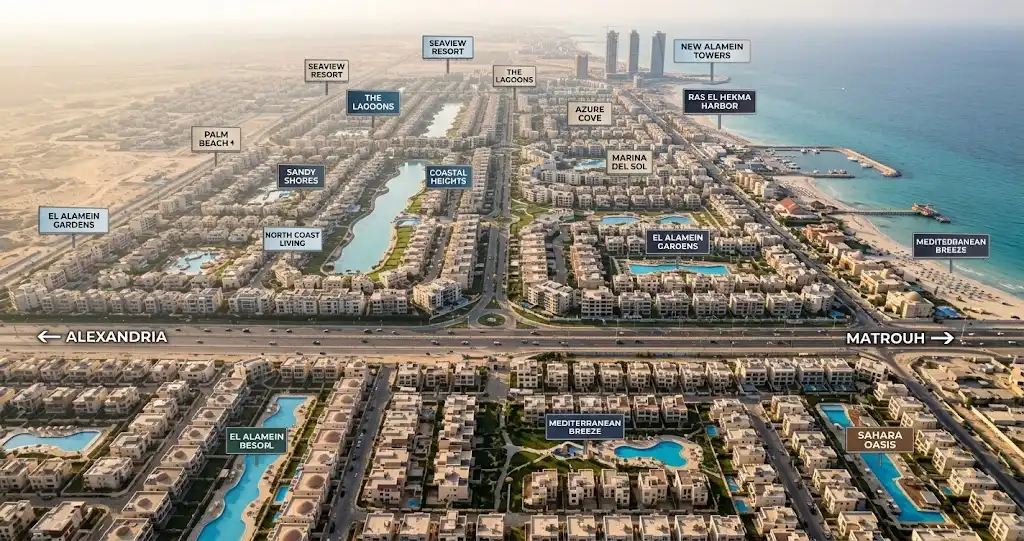
The Egyptian real estate market has grown at a pace few sectors can match. Egypt’s residential real estate market is projected to reach roughly 10.71 billion US dollars in 2026 alone. Cairo holds close to 44 percent of that value, with East Cairo and the North Coast accounting for the largest share of new project launches.
|
|
|
According to Daily News Egypt’s coverage of the Association of Real Estate Developers’ 2026 report, the market is entering a more mature, stable phase after a period the association describes as repositioning, with performance increasingly concentrated among large, financially robust developers. That maturing market rewards developers who have already built genuine brand equity and makes life harder for those who have not.
When dozens of developers are competing for the same pool of buyers with similar payment plans and similar finishes, branding becomes the deciding factor. It is the difference between a project that sells out during the launch phase and one that lingers for years.
What real estate developer branding actually means
There is an important distinction most developers miss early on: branding a single project is different from branding the developer as a company. A project brand lives and dies with that specific development. A developer brand carries across every project that the company ever launches, for years or decades.
Talaat Moustafa Group is a useful example of this distinction working in practice. The company posted EGP 49.1 billion in sales in the first quarter of 2026, and continued to benefit from strong brand recognition and a large recurring customer base, even with limited reliance on new project launches during that quarter. That is what a real developer brand does. It keeps generating trust and sales momentum even between major launches, because buyers are not just buying a project, they are buying into the company behind it.
A new developer entering the Egyptian market needs to think about both layers from day one: what does this specific project promise, and what does our company stand for beyond this one development.
Brand strategy before brand identity
Before any logo or colour palette gets decided, a real estate developer needs to answer three strategic questions. Who is the buyer this project is actually for. What lifestyle or outcome is being promised. What makes this developer genuinely different from the dozens of others launching similar projects in the same area.
This is the same thinking covered in our complete guide to branding strategy, and it applies just as directly to real estate as it does to any other business. The developers who skip this step and go straight to visual identity end up with a brand that looks polished but says nothing specific, which is exactly what happens when every project in a crowded market starts to look the same.
The visual identity of a real estate brand
Once the strategy is clear, the visual identity becomes the tangible expression of it. The logo, the colour palette, the typography, and the photography style all need to communicate the same positioning consistently, whether someone sees them on a construction hoarding, a sales brochure, or an Instagram post.
Native Studio built the visual identity for EHD (Egyptian Hungarian Developments) from the ground up. The brief required communicating Egyptian and Hungarian heritage simultaneously, without the result feeling foreign to a local buyer. Every visual decision, the monogram, the deep red, the weight of the typography, traced back to that single strategic requirement.
Logo design specifically is its own deep topic with its own considerations for real estate. Our article on real estate logo designs covers exactly what makes a property developer’s logo work, with more Egyptian examples.
Trust: the real currency of real estate branding
Buying property is one of the largest financial decisions most people ever make. With average unit prices now reaching roughly EGP 15.7 million according to recent market data, the stakes for the buyer are significant, and a consistent, credible brand is what reduces the perceived risk of that decision before contracts are even discussed.
Native Studio’s rebrand of Cairo Heights Developments into C Developments is a clear example of branding being used to build and signal trust during a strategic shift. The company was moving from primarily residential projects into larger commercial and mixed-use development, a much bigger and more complex category. The rebrand needed to communicate that shift clearly to investors and partners who already trusted the original company, without losing that existing trust in the process. The new name, identity, and positioning were built specifically to carry that confidence forward into a new chapter.
Branding across the developer’s life cycle
Branding needs change depending on where a developer is in their growth. A new developer entering the Egyptian market for the first time needs to establish credibility quickly, often with limited brand recognition and no completed projects to point to yet. An established developer with multiple ongoing projects needs consistency, so that a buyer recognises the same quality and values whether they are looking at a North Coast chalet or a New Cairo apartment from the same company.
A developer going through a pivot, like the shift from Cairo Heights Developments to C Developments, needs something different again: a brand that signals real change while still honouring the trust already built. Getting this stage-specific thinking right is often the difference between a rebrand that strengthens a company and one that confuses its existing buyers.
Real estate branding in the digital age
A developer’s website, social media presence, and digital sales tools are now a direct extension of the brand, not a separate marketing afterthought. Buyers research a project online long before they ever visit a sales office, and what they find shapes their expectations of everything that follows.
This matters more in Egypt specifically because so much of the buyer journey now happens on Instagram and Facebook before a single phone call is made. Our article on real estate social media design covers exactly what works for Egyptian developers on these platforms, from content style to visual consistency across posts.
Luxury positioning: a different branding challenge
Luxury real estate developers face branding challenges that differ meaningfully from the mid-market playbook — the visual language, tone, and even the pricing strategy all shift once a brand competes on exclusivity rather than accessibility. This is enough of a distinct discipline that it deserves its own deep dive: see our complete guide to luxury real estate branding for the six elements that separate premium from truly luxury positioning.
Case studies — how Native Studio has done this
These three projects represent three different branding challenges, each solved with a different strategic answer.
EHD — building a brand from nothing
No existing identity, no existing market position. The challenge was creating a brand that communicated Egyptian-Hungarian heritage from day one, in a way that felt premium and distinctive rather than foreign or confusing to a local buyer.
C Developments — rebranding through a strategic pivot
An existing company with real trust and history, moving into a significantly larger category of development. The challenge was signalling growth and ambition without abandoning the credibility the original brand had already earned.
Golden View Developments — luxury positioning in a crowded market
A North Coast market full of developments competing for the same affluent buyer. The challenge was building a sense of genuine exclusivity that felt earned rather than claimed, through restraint rather than volume.
Common mistakes Egyptian developers make
- Skipping strategy and going straight to a logo. The result is a polished identity with nothing specific behind it, which becomes obvious the moment a buyer compares it to a competitor.
- Copying whatever the developer next door is doing instead of differentiating. In a market with hundreds of similar launches, looking safe usually means looking forgettable.
- Treating the brand as fixed at launch and never revisiting it, even as the company grows into new categories or markets.
- Having no brand guidelines, so the sales team, the marketing agency, and the digital team all apply the brand slightly differently across every touchpoint.
- Underestimating how much buyers research online before ever speaking to a sales team, and leaving that digital first impression inconsistent with everything else.
Frequently asked questions
Q: How much does real estate branding cost in Egypt?
Costs vary significantly based on scope. A full brand strategy and identity project for a real estate developer typically costs more than a smaller business because of the additional considerations around scale, multiple projects, and long-term consistency. The more useful question is what the brand is worth across every project that company launches over the next decade.
Q: How long does a real estate branding project take?
A thorough strategy and identity process typically takes between two and four months for a developer-level brand, depending on complexity. Rushing this process to launch a project faster usually means revisiting the brand within a year or two.
Q: Does a small or new developer need a strong brand?
Yes, arguably more than an established one. A new developer has no track record to lean on, which makes a clear, credible brand the fastest way to establish trust with a first wave of buyers who have never heard of the company before.
Q: What is the difference between branding a project and branding the company?
A project brand applies to one specific development and often has its own name, logo, and identity. A company brand, or developer brand, carries across every project that company launches over time. The strongest real estate brands manage both layers deliberately rather than letting the project brand become the only thing buyers remember.
To summarise
Egypt’s real estate market is entering a more mature, more competitive phase, and the developers who will lead it are not necessarily the ones with the biggest budgets. They are the ones with the clearest brand behind their projects. Real estate branding done properly means strategy before identity, consistency across every project and every platform, and a genuine understanding of what makes one developer different from the dozens of others competing for the same buyer.
Native Studio has built brands for Egyptian developers across every stage of growth, from EHD’s identity built from nothing, to C Developments’ strategic rebrand, to Golden View’s luxury positioning on the North Coast.
Want to see how this looks in practice? Take a look at our work and see how we have approached real estate branding for developers across Egypt.