
Imagine you are a real estate developer in New Cairo. You have a great project, a strong location, and competitive prices. But so does everyone else. When a buyer opens their phone and starts comparing developments, your project looks almost identical to the five others on the page. Same photography. Same fonts. Same language. They cannot tell the difference, so they go with whoever reaches them first.
That is not a marketing problem. That is a branding strategy problem.
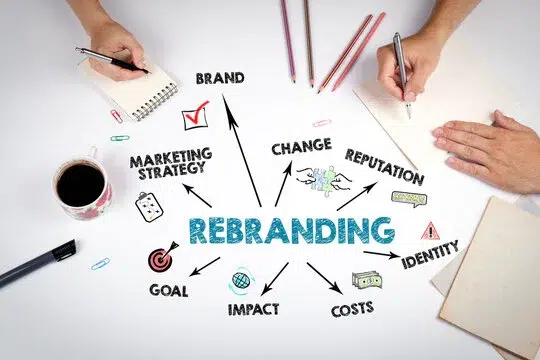
Branding strategy is the thinking that sits behind everything your audience sees and feels about your business. It is what makes one Egyptian developer command a premium while another offers the same product at a lower price and still loses the deal. This guide will show you what branding strategy actually is, how to build one, and what Egyptian brands are doing right and wrong. By the end, you will know exactly where to start.
1. What is branding strategy?
A branding strategy is a long-term plan that defines how a business wants to be perceived by its audience. It covers who you are, what you believe in, how you sound, how you look, and how you position yourself against everyone else in your market.
It is not a logo. It is not a color palette. Those are the outputs of a branding strategy, not the strategy itself.
| A logo is what people see. A branding strategy is why they remember you. |
Think about C Developments, formerly known as Cairo Heights Developments. When they made the decision to rebrand, they were not just changing their name and visual identity. They were communicating a strategic shift toward larger commercial and mixed-use projects. That shift in positioning, in audience, in message, was the strategy. The new logo and name were simply how that strategy became visible.
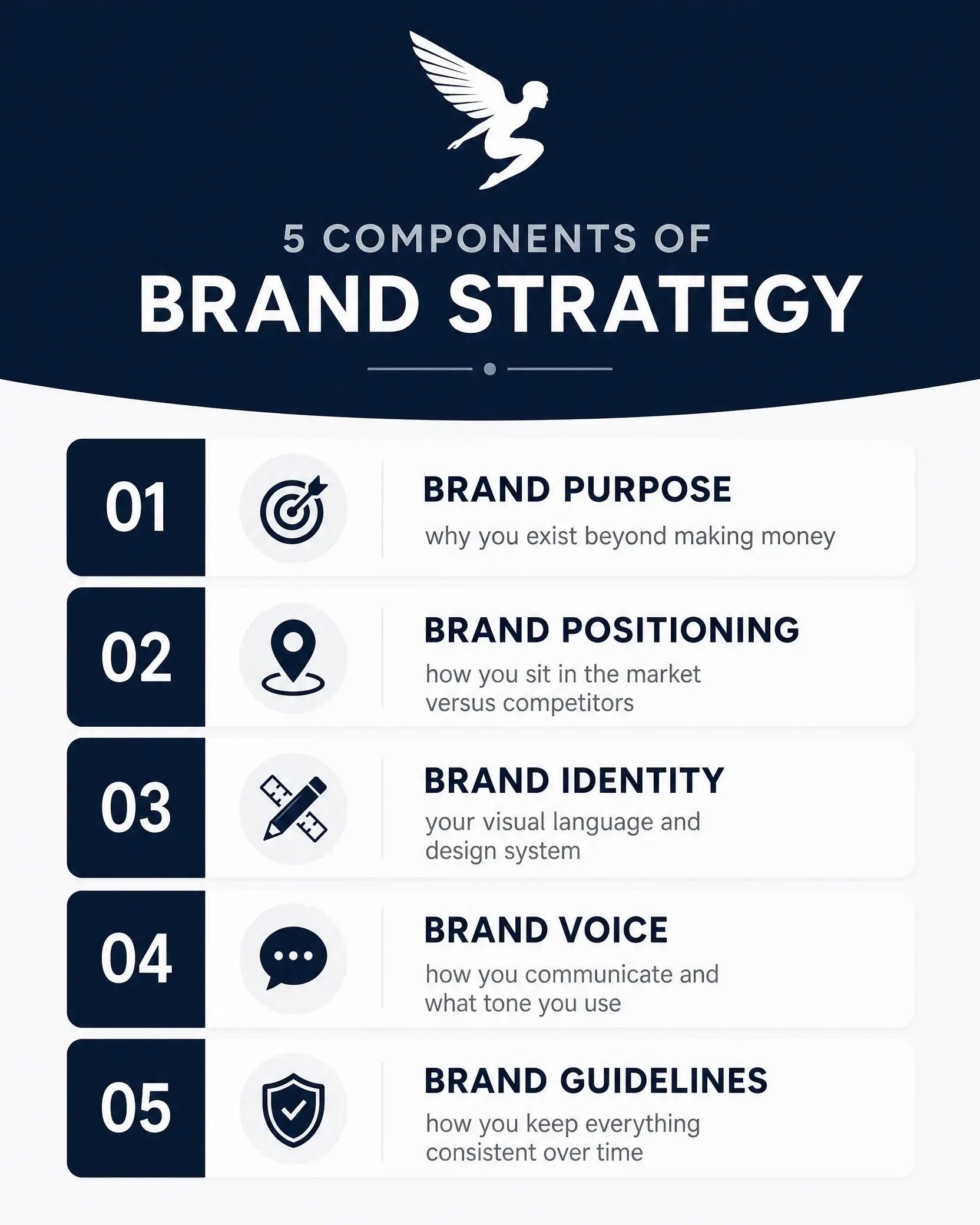
A complete branding strategy includes:
- Your brand purpose — why you exist beyond making money
- Your brand positioning — how you sit in the market versus competitors
- Your brand identity — your visual language and design system
- Your brand voice — how you communicate and what tone you use
- Your brand guidelines — how you keep everything consistent over time
If you want a plain-English breakdown of exactly what branding strategy means and what it is not, we cover this in detail in our article on what is branding strategy
2. Why branding strategy matters for Egyptian businesses
Egypt’s real estate market has grown dramatically over the past decade. New Cairo, the North Coast, 6th of October, and the New Administrative Capital are all home to hundreds of developments competing for the same pool of buyers. The problem is that most of them look and sound almost identical.
Consider two anonymous developers both launching projects on the North Coast. Developer A has a clear strategy: they position themselves as the choice for Egyptian families who want a genuine Mediterranean lifestyle without travelling abroad. Every decision they make, from the architecture to the photography to the copy on their brochure, reinforces that positioning. Developer B has a project in the same area at a similar price point but no clear strategy. Their materials look generic. Their message could apply to anyone.
When a buyer compares the two, Developer A feels like it was made for them. Developer B feels like every other option. Developer A wins not because of a better product but because of a clearer brand.
This is true beyond real estate. Egyptian businesses in every sector face the same challenge. A market that is growing fast attracts more competition. More competition makes differentiation harder. Branding strategy is what cuts through the noise.
Egyptian brands that invest in strategy consistently outperform those that do not — you can see this clearly in how Egypt’s top real estate brands approached their Ramadan 2024 campaigns
3. The 5 core elements of branding strategy
1. Brand purpose
Your brand purpose is the reason your business exists beyond making money. It is the deeper mission that drives decisions and connects with your audience on an emotional level.
An Egyptian developer whose purpose is to give Egyptian families access to premium living they can actually afford will make different decisions about pricing, design, and communication than one whose only goal is margin. That purpose becomes the filter for every brand decision.
2. Brand positioning
Positioning is how you sit in the market relative to everyone else. It answers the question: why should someone choose you over the alternative?
A North Coast developer targeting affluent buyers from Cairo is positioned completely differently from a 6th of October developer targeting young families buying their first home. Different audience, different lifestyle promise, different price point, different visual language. Positioning defines all of it.
3. Brand identity
Brand identity is your visual language: your logo, colors, typography, photography style, and design system. This is where most Egyptian businesses start. The problem is that identity without strategy is just decoration.
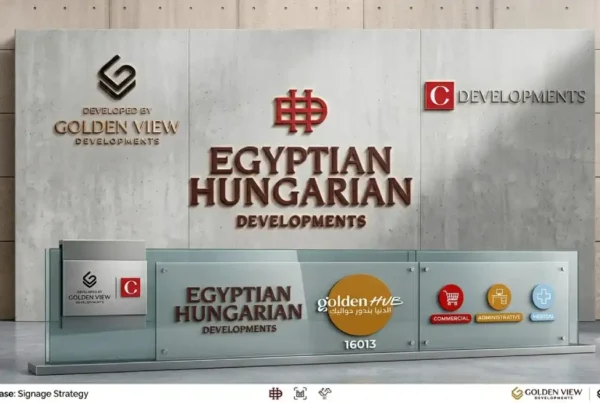
When Native Studio built the visual identity for EHD (Egyptian Hungarian Developments), the design decisions were rooted in strategy. The identity had to reflect the Egyptian-Hungarian heritage of the development, appeal to a specific buyer profile, and communicate a sense of considered quality without becoming inaccessible. Every visual choice came from those strategic decisions.
4. Brand voice
Your brand voice is how you communicate: the words you use, the tone you take, the personality that comes through in every piece of writing.
The difference between a luxury Zamalek brand and an affordable New Cairo developer targeting young families is not just visual. It is in the language. The luxury brand speaks with quiet confidence. It does not shout. The affordable developer speaks warmly and directly. It makes the buyer feel included. Both are effective. Neither would work if swapped.
5. Brand guidelines
Brand guidelines are the document that keeps everything consistent. They define how the logo should and should not be used, which colours are primary and which are secondary, which fonts are approved and how to use them, and how the brand should sound across different contexts.
Without guidelines, things fall apart. We see this regularly with Egyptian businesses where the sales team is using one version of the logo, the agency is using another, and the developer’s own website has a third. The brand dilutes every time this happens.
HubSpot’s branding guide covers how global brands apply these five elements if you want to see how the same principles work across different markets.
4. Branding strategy vs marketing strategy
This is one of the most common points of confusion for Egyptian business owners and developers. The short answer is this: branding is who you are. Marketing is how you tell people.
Your brand is the constant. Your marketing campaigns sit on top of it. Think about Vodafone Egypt. Their brand has been built around their distinctive red, their confident tone, and a promise of connection for over two decades. The marketing campaigns change every season, every product launch, every campaign. But the brand stays the same. People recognize it instantly regardless of which campaign they are seeing.
When marketing and branding are misaligned, the result is confusing. A developer who runs a campaign promising luxury but whose brand materials look generic will create a gap between the promise and the reality. That gap costs trust.
| Branding Strategy | Marketing Strategy |
| Defines who you are | Promotes what you offer |
| Long-term and consistent | Short-term and campaign-driven |
| Builds emotional connection | Drives specific actions |
| Stays the same across years | Changes with each campaign |
| Informs every marketing decision | Executes on top of the brand |
| Example: Vodafone’s red and bold identity | Example: Vodafone’s Ramadan campaign |
If you want to go deeper on how branding strategy and marketing work together and why most Egyptian brands get this wrong, read our full article on branding strategy in marketing
5. How to build your branding strategy step by step
To show how this works in practice, we will use a real Native Studio project as the example throughout these steps. Salam Properties came to Native Studio without a clear brand identity. They had a product and an audience in mind but no consistent way of presenting either to the world. Here is how the process unfolded.
Once you have worked through these steps, the next practical move is putting it all into one document. Our article on how to create a brand strategy outline gives you a ready-to-fill framework for Egyptian businesses.
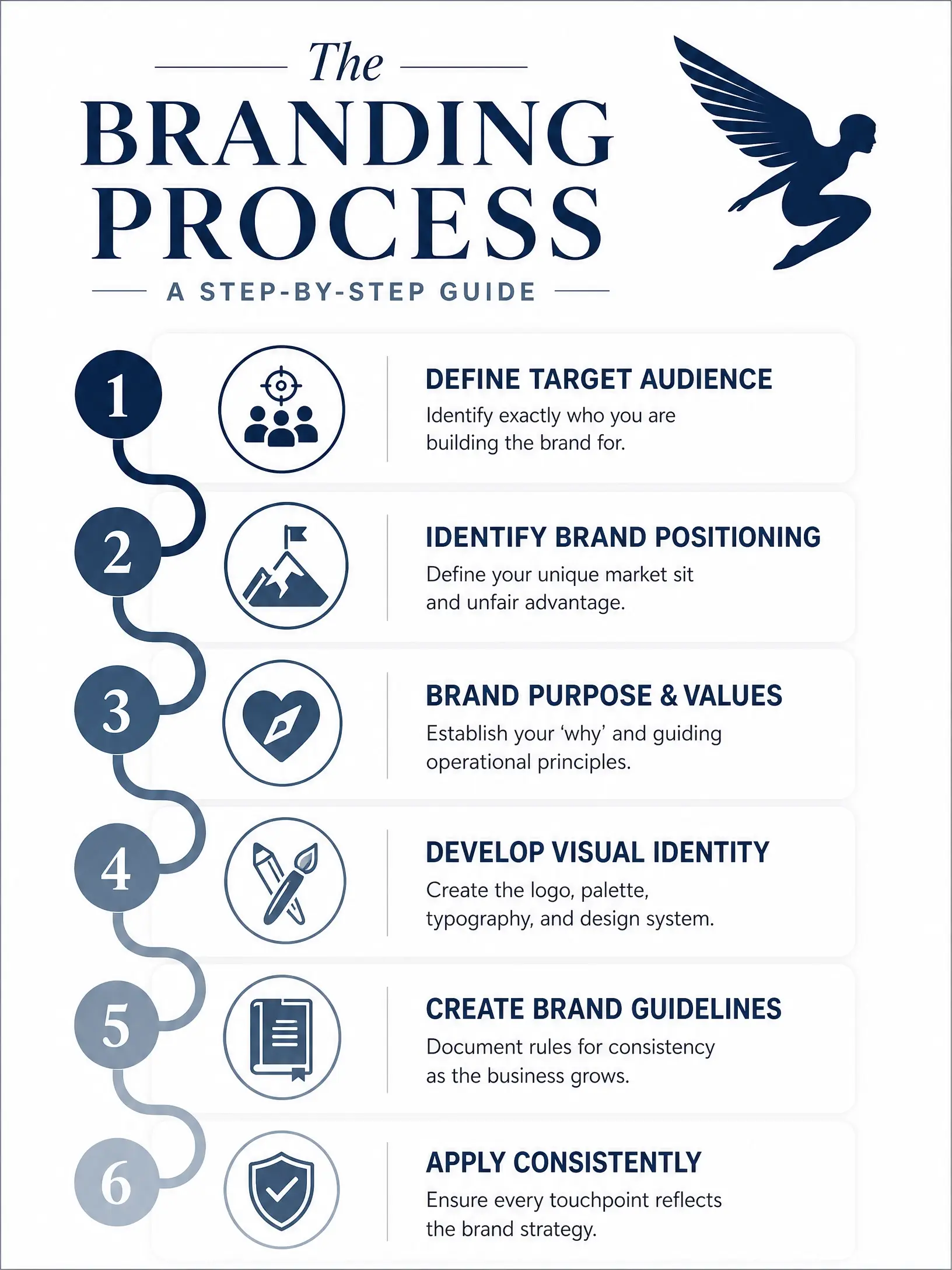
1- Define your target audience
Before anything else, you need to know exactly who you are building this brand for. Not a general description like ‘upper middle class Egyptians’ but a specific picture of the person making the buying decision.
For Salam Properties, the audience was Egyptian families in their 30s and 40s who had achieved financial stability and were ready to invest in a lifestyle, not just a property. Understanding that specific buyer informed every decision that followed.
2- Identify your brand positioning
Once you know your audience, define where you sit in the market. What makes you different from the alternatives your audience is considering? What is your unfair advantage?
Positioning is not about being the best. It is about being the most relevant to a specific audience.
3- Write your brand purpose and values
Your purpose is the why behind everything. Your values are the principles that guide how you operate. Both should be specific enough to actually inform decisions, not generic statements that apply to any business.
Avoid values like ‘quality’ and ‘integrity.’ Every business claims those. Find the values that are genuinely specific to how you work.
4- Develop your visual identity
Now the visual work begins. Logo, color palette, typography, photography direction, and design system. This is where strategy becomes tangible.
Every visual decision should trace back to the strategy. If your brand is about accessible luxury for Egyptian families, your visual identity should feel premium but not cold, warm but not casual. The tension between those two requirements is where interesting design lives.
5- Create your brand guidelines
Document everything. How the logo is used and how it is not. Which colors are primary and which are accents. How the brand sounds in a formal context versus a social media post. This document is what keeps the brand consistent as the business grows.
6- Apply it consistently everywhere
A branding strategy only works if it is applied consistently. Every touchpoint, from the sales brochure to the Instagram post to the email signature, should feel like it comes from the same place.
Consistency builds recognition. Recognition builds trust. Trust builds preference. Preference drives sales.
6. Real Egyptian brand examples from Native Studio
The following examples are from actual Native Studio projects. Each one shows branding strategy at work in the Egyptian market.
C Developments — strategic repositioning
Cairo Heights Developments had built a track record in residential projects but wanted to move into larger commercial and mixed-use development. The problem was that their name and identity communicated the old positioning, not the new one.
The rebrand to C Developments was not just a name change. It was a strategic signal to the market: this company thinks bigger now. The new identity was built to communicate scale, commercial credibility, and ambition. Every decision about the new visual language came from that strategic brief.
EHD — brand creation from the ground up
Egyptian Hungarian Developments came to Native Studio needing a brand built from scratch. The challenge was communicating a heritage that is genuinely unique in the Egyptian market, Egyptian roots with European partnership, without it feeling forced or unfamiliar to the local buyer.
The brand identity Native Studio created for EHD draws on both cultures without leaning too heavily on either. The result is a brand that feels premium and distinctive in a market where most competitors look very similar.
Golden View — luxury positioning on the North Coast
Golden View needed to position as a luxury offering in a competitive North Coast market. The challenge was communicating genuine exclusivity without alienating buyers who aspire to luxury but are sensitive to anything that feels inaccessible or arrogant.
The brand strategy for Golden View defined a tone of quiet confidence, a visual identity built around restraint and quality, and a positioning that made the buyer feel that choosing Golden View was a reflection of their own good taste rather than a purchase they needed to justify.
7- Common branding mistakes Egyptian businesses make
After working with Egyptian developers and businesses across multiple industries, Native Studio sees the same patterns repeatedly. These are the most common mistakes and why they are costly.
- Skipping strategy and going straight to the logo. This is the most common mistake we see with Egyptian developers who want results fast. They brief a designer on a logo before anyone has answered the strategic questions. The result is an identity with no foundation. When the business grows or the market changes, the brand has nothing to build on.
- Copying the competitor next door instead of differentiating. Walk through any cluster of New Cairo developments and the visual similarity is striking. Everyone has found the same safe middle ground. The businesses that break through are the ones that made a deliberate choice to look and sound different.
- Rebranding every two years because the first brand never had a strategy behind it. We work with clients who have had three different logos in five years. Each rebrand was a reaction to the previous one not working. The issue is never the logo. The issue is the absence of a strategy that the identity should have been built on.
- Having no brand guidelines so the brand gets applied differently by everyone who touches it. Sales teams, external agencies, developers, and social media managers all making slightly different decisions about how to use the brand. Over time the cumulative effect is a brand that feels inconsistent and unprofessional.
- Treating branding as a one-time cost rather than a long-term asset. A brand is not a project that ends at launch. It is an asset that compounds over time when managed consistently. The businesses that treat it that way are the ones that build genuine market recognition.
8. How Native Studio approaches branding strategy
Native Studio is a Cairo-based creative studio specialising in brand identity and strategy, with a focus on Egyptian real estate developers and businesses that want to stand out in a competitive market.
Our process starts with strategy, not design. Before any visual work begins, we work with clients to define their positioning, their audience, their purpose, and their competitive landscape. The design work that follows is built on that foundation, which is why it holds up over time.
Our portfolio includes C Developments, EHD, Salam Properties, APlus, and Golden View, among others. Each of those brands was built on a clear strategy that informed every design decision.
If you want to build a brand with a real strategy behind it, we would love to talk.
9. Frequently Asked Questions
Q: What is the difference between branding and a logo?
A logo is one element of your brand identity, which is itself one element of your overall brand strategy. Branding covers everything from your positioning and purpose to your visual language, your tone of voice, and how consistently you apply all of it. A logo without strategy behind it is just a mark. A brand is what makes that mark mean something.
Q: How long does it take to develop a branding strategy in Egypt?
A thorough branding strategy project typically takes between six and twelve weeks depending on the complexity of the business and how much research is required. Visual identity development, which follows the strategy, adds another four to eight weeks. Rushing the process almost always means revisiting it within a year.
Q: Can a small Egyptian business benefit from branding strategy?
Absolutely. Branding strategy is not only for large developers or corporate businesses. Any business that competes for attention, whether it is a local restaurant, a law firm, or a boutique developer, benefits from being clear about who it is and who it is for. The scope and budget of the strategy scales with the size of the business.
Q: What is the first step in building a brand?
Define your target audience with as much specificity as possible. Everything in branding flows from knowing exactly who you are building this brand for. Without that clarity, every other decision becomes a guess.
10. Conclusion
Branding strategy is not a luxury reserved for large corporations or global brands. In a market like Egypt, where competition in real estate, professional services, and consumer businesses is growing faster than ever, a clear brand strategy is the difference between being remembered and being ignored.
The businesses and developers that invest in getting this right do not just look better. They command better prices, attract better clients, and build reputations that compound over time.
If this guide raised more questions than it answered, that is a good sign. It means you are thinking seriously about your brand. The next step is understanding what branding strategy looks like in practice for your specific business.