
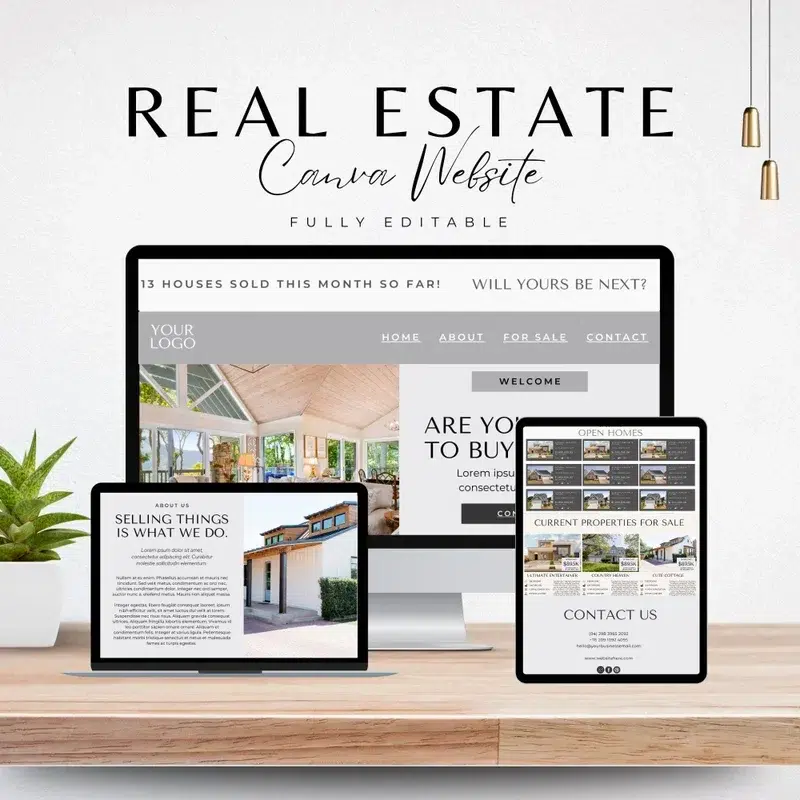
97% of homebuyers now start their search online, and 76% do so on a phone, according to the National Association of Realtors’ 2025 data. That’s not a future trend — it’s already how almost every serious buyer behaves today. A broker’s website isn’t a digital business card anymore. For most buyers, it’s the first real interaction with the brand, often before they ever pick up the phone. Weak realtor website design — a slow generic template, a clunky mobile layout — loses that buyer before a conversation even starts.
High-net-worth buyers and international investors, in particular, vet brokers online long before requesting a viewing. A polished, fast, well-built site signals credibility. A generic one raises doubt. At Native Studio, we build realtor website design systems meant to do more than look good — they’re built to actually convert serious buyers into qualified leads.
Why Generic Templates Fall Short
Off-the-shelf website builders tend to share the same problems: bloated code that slows everything down, broken listing feeds, and mobile layouts that were clearly an afterthought. This is often less about the tool itself and more about who’s behind it — the right real estate web developers treat a site as an extension of the brand, not a checklist to finish quickly. Purpose-built realtor website design takes a different approach — one focused on how buyers actually browse and decide, not just how a homepage looks in a screenshot.
Visuals need to be built for the property, not squeezed into a generic template. High-resolution galleries, video headers, and layouts that make a multi-million-dollar listing actually feel like one — that’s the baseline, not an upgrade.
Bilingual support has to be real, not bolted on. For brokers reaching buyers across the Gulf, Europe, and beyond, Arabic and English both need to feel native, with correct typography and navigation direction in both — not an awkward translation layer added afterward.
And speed simply isn’t negotiable. Fast-loading pages convert roughly 30% better than slow ones. On a site full of high-resolution property photos, that’s the difference between a buyer waiting to see a floor plan and a buyer closing the tab before it even loads.
Contact UsWhats AppThe 4 Things Strong Realtor Website Design Gets Right
- Immersive Property Showcases: Video headers, interactive layouts, and 3D virtual tours matter more than most brokers assume — 88% of buyers now expect a virtual tour before they’ll even consider booking an in-person viewing.
- Smart, Localized Search: Neighborhood-specific pages and filters by lifestyle, amenities, or expected returns capture buyers searching for something specific — not just “properties for sale,” but the exact kind of property and area they already have in mind.
- Broker Authority Built Into the Layout: Press mentions, past closings, and a real executive profile — not buried in an “About” page nobody clicks, but woven into the site itself. This works even better when paired with a broader real estate personal branding approach and for brokers pitching larger portfolio deals, with strong presentation design services for the materials that follow.
- Lead Capture That Doesn’t Feel Like a Wall: A private consultation form, WhatsApp scheduling, or gated access to off-market listings — designed to feel like an invitation, not an obstacle between the buyer and the information they came for.
Generic Template vs. Real Realtor Website Design
| Generic Template | Native Studio | |
| Visual polish | Stock layouts and generic elements | Custom design built around the property tier |
| Mobile experience | Slow galleries, clunky navigation | Fast, thumb-friendly, built mobile-first |
| Language support | Broken or bolted-on translations | Proper bilingual Arabic/English design |
| Result | High bounce rates, weak leads | Longer browsing sessions, qualified inquiries |
A Quick Realtor Website Design Health Check
Before investing in a full redesign, run the existing site through this quick self-test:
- Loads in under 3 seconds on mobile? — If not, a meaningful share of visitors are already leaving before the page finishes rendering.
- Can buyers filter by neighborhood, price, and property type in two clicks or fewer? — If it takes longer, they’ll likely leave for a portal that makes it easier.
- Reads correctly in both Arabic and English? — No broken layout, no mismatched typography, no direction switching that feels off.
- A clear, low-friction way to book a viewing or ask a question on every listing page? — Not buried in a general contact page three clicks away.
Answer “no” to more than one of these, and a redesign usually pays for itself quickly in recovered leads alone.
Contact Us Whats AppLocal SEO That Actually Brings in Buyers
A beautiful site with no search visibility still won’t generate leads. Real realtor website design accounts for SEO from the start — neighborhood-specific landing pages, proper meta titles and descriptions for every listing, and schema markup that helps Google understand property details like price, location, and type. Long-tail searches (“apartments for sale in New Cairo with garden”) consistently drive more qualified traffic than broad, generic terms, which is why dedicated area pages matter more than most brokers assume.
Data Security and Buyer Privacy
High-value real estate inquiries often involve sensitive financial details — budget ranges, personal identification for viewings, sometimes even proof of funds. A serious site needs SSL encryption as standard, secure form handling for private consultation requests, and clear privacy practices around how lead data is stored and used. For brokers working with high-net-worth or international buyers, this isn’t optional — it’s part of what signals the site is trustworthy enough to hand over real information.
Connecting to Property Portals
Most buyers don’t only browse a broker’s own site — they also check listings on platforms like Property Finder, Bayut, or similar regional portals. Strong realtor website design includes a listing feed that syncs automatically with these platforms, so a broker isn’t manually re-entering the same property twice, and pricing or availability never falls out of sync between the website and third-party portals.
Common Mistakes Brokers Make With Their Websites
- Treating the website as a one-time project. The real cost: listings, prices, and availability change constantly, and a site that isn’t updated regularly quietly turns from an asset into a liability.
- Ignoring page speed after launch. The real cost: adding more high-resolution images and embeds over time gradually slows a site down if nobody’s monitoring performance, undoing the fast load times it launched with.
- Making the contact form the only way to inquire. The real cost: buyers browsing on mobile, especially internationally, often prefer WhatsApp or a quick call — a form-only site quietly filters out serious leads who simply won’t bother filling one in.
- Skipping mobile testing on real devices. The real cost: a site that looks fine in a desktop browser’s mobile preview can still break in genuinely unexpected ways on an actual phone, right when a buyer is browsing.
How Long Until a New Website Pays for Itself
Realtor website design is a real investment, but a well-built site typically starts generating a noticeable increase in qualified inquiries within the first one to three months after launch — mainly from recovered leads that a slow or confusing site was previously losing. For brokers actively marketing multiple listings, the site often pays for itself through even a single additional closed deal that a poor website would have lost early.
How Native Studio Builds Realtor Websites
At Native Studio, realtor website design is treated as one part of a broader digital system, not a standalone project. We work with luxury developers, brokerages, and individual realtors across Egypt, Saudi Arabia, Qatar, the UK, the USA, Australia, Singapore, Malaysia, Indonesia, Turkey, and Ghana — building custom search interfaces, connecting listing feeds to CRMs like Salesforce and HubSpot, and making sure the website matches the same visual identity carried across a broker’s advertising and social presence.
Realtor Website Design in Practice at Sumou Gate
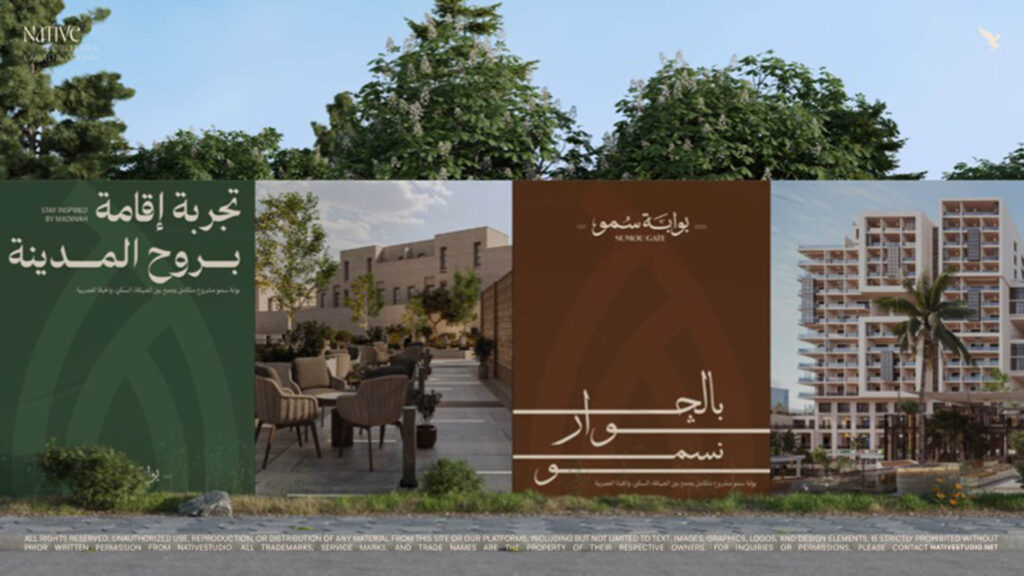
One clear example of what this looks like in practice comes from Native Studio’s work with Sharaka Plus on Sumou Gate. Before any digital work began, the studio built the development’s full brand architecture — a dedicated color system and distinct zone-based identities across the project. That foundation is exactly what a realtor or developer website needs to carry through online: the same colors, tone, and positioning a buyer sees in a brochure or sales gallery, reflected consistently on the site itself. A website built on top of an undefined or inconsistent brand tends to feel disconnected the moment a buyer compares it to anything else the business has produced — and that inconsistency is often what quietly costs a broker credibility before a single message is ever sent.
 Ready for Realtor Website Design That Actually Converts?
If your current site is costing you serious buyers before they ever call, Native Studio’s team can help you fix that.
Chat with Native Studio on WhatsApp | Call the Team
Contact Us Whats AppFrequently Asked Questions
Why does custom realtor website design matter for luxury brokers specifically?
High-net-worth buyers expect a high level of digital polish. A custom site builds that impression instantly, loads fast, and guides buyers through a search journey that converts browsing into real inquiries.
Can a realtor website support both Arabic and English properly?
Yes — done right, this means native right-to-left and left-to-right switching, matching typography in both languages, and localized search filters, not a bolted-on translation layer.
How does better website design actually improve lead generation?
By replacing generic templates with clear calls to action, gated access to exclusive listings, and direct CRM integration — all of which turn passive browsing into qualified, trackable inquiries.
What features does a serious realtor website design need?
At minimum: interactive area guides, fast-loading virtual tours, filterable search, a mobile-first layout, and simple booking for private viewings.
How long does it take to build a custom realtor website?
Most projects take six to ten weeks from initial design through launch, depending on how much listing data and how many custom features need to be integrated.