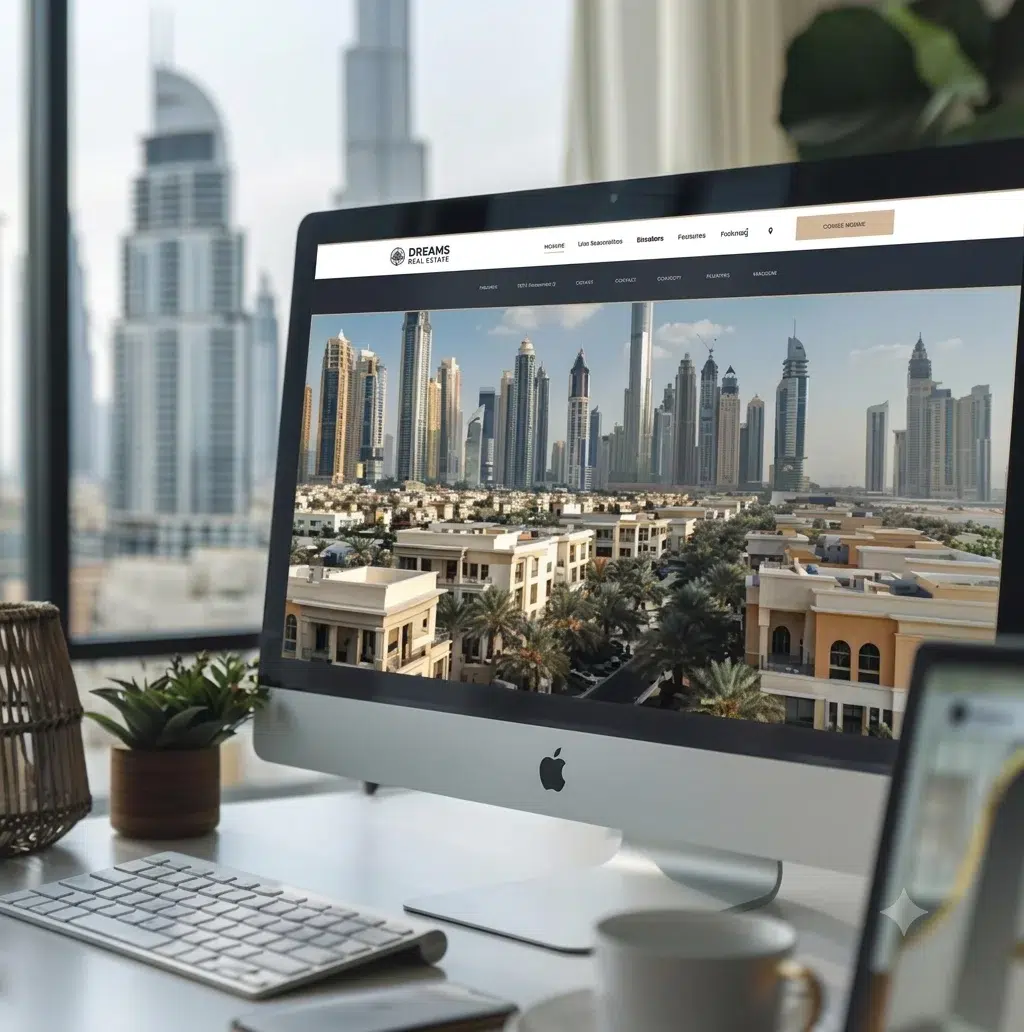
A property developer’s website is often the first real interaction a buyer has with the brand — before the sales gallery, before the brochure, sometimes before they’ve even seen a rendering. Yet many developers still treat the website as a technical checkbox handled separately from the brand itself, hiring real estate web developers who can build a functional site but have no real understanding of the identity the site is supposed to represent. The result is a website that loads fast and looks nothing like the rest of the brand.
This guide covers what actually matters when choosing real estate web developers, and why the strongest results come from developers who build the site as an extension of the brand — not as a separate technical project.
Why Real Estate Websites Are Different From Standard Business Websites
Real estate websites carry a heavier burden than most business sites. They typically need to:
- Present large amounts of information (unit types, pricing, floor plans, amenities) without overwhelming the visitor
- Build enough trust in a single visit to justify a phone call or site visit about a purchase worth a significant portion of a buyer’s life savings
- Work seamlessly across desktop and mobile, since many buyers browse developments during commutes or in passing moments
- Reflect the same visual language as OOH campaigns, sales galleries, and printed materials — any inconsistency undermines buyer confidence
A generic template, however well-coded, tends to fail at the second and fourth points — which are exactly where real estate buying decisions are won or lost.
Contact Us Whats AppWhat to Look for in Real Estate Web Developers
- Do they understand branding, or just code? The strongest real estate websites are built by teams who treat the website as one expression of a larger brand system, not an isolated deliverable.
- Can they handle complex property data cleanly? Unit listings, interactive floor plans, and filtering tools need to be intuitive, not just technically functional.
- Do they design for mobile-first browsing? A large share of real estate research now happens on mobile, and a site that wasn’t designed mobile-first usually shows it.
- Do they understand lead capture without being intrusive? The best real estate sites make it easy to inquire without aggressive pop-ups that undermine the brand’s premium feel.
- Have they built sites for developments similar in scale to yours? A developer marketing a single project has different needs than one marketing a multi-phase mega-development.
How Native Studio Approaches Real Estate Web Development
Native Studio real estate web developers treat website development as part of a single connected brand system rather than a standalone service.
Its Website Development & UI/UX offering sits alongside brand strategy, visual identity, advertising, and social media management. The same team responsible for a development’s brand architecture and color system is also responsible for how that system translates onto the web.
Native Studio’s Real Estate Web Developers Project
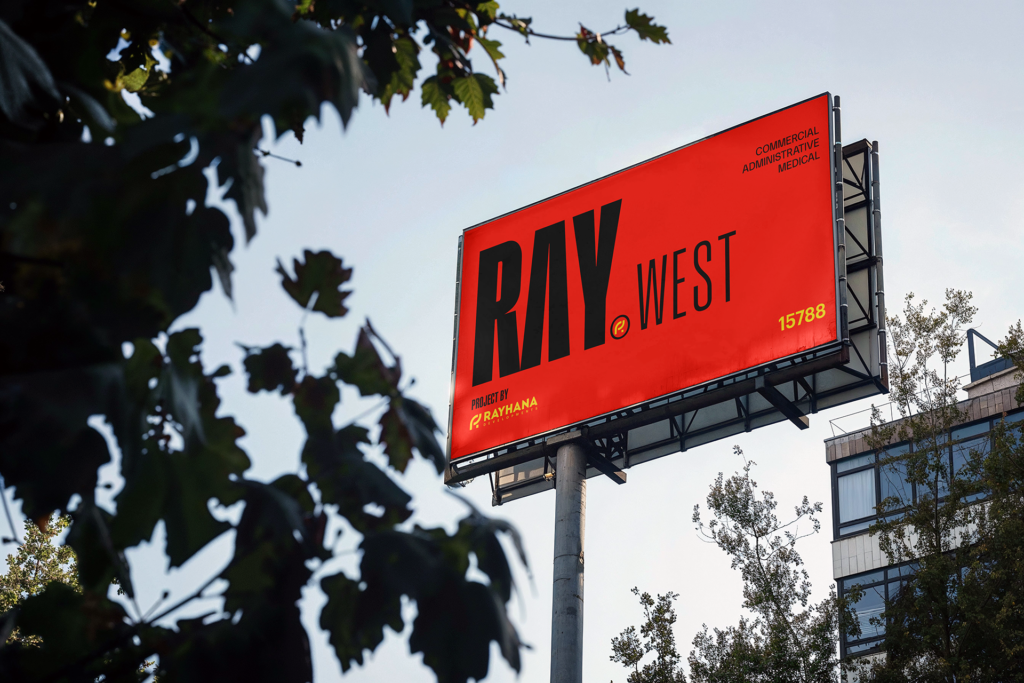
This connected approach is visible in Native Studio’s work as branding, campaigns, and they are the best real estate web developers partner for the real estate developer Rayhana on their project, the Ray West project. The brand’s color system and zone-based identities were built as a foundation meant to carry consistently across every touchpoint the buyer encounters — including digital.
A website built on top of a defined brand system, rather than before one exists, is far less likely to require a costly redesign once the full brand identity is finalized.
Native Studio’s broader portfolio includes full identity and repositioning work for developers such as C Developments, EHD, Salam Properties, APlus, and Golden View. Across all projects, the same principle applies: design decisions, including web design, follow from a defined strategy rather than precede it.
This same approach has been applied across Native Studio’s international footprint, with projects delivered in Egypt, Saudi Arabia, Qatar, the United Kingdom, Turkey, the United States, Malaysia, Singapore, Indonesia, Ghana, and Australia.
 Ready to Build a Website That Matches Your Brand?
If your development deserves a website that feels like part of the same brand as your campaigns and sales materials — not a disconnected afterthought — Native Studio’s real estate web developers team can walk you through the process.
Contact Us Whats AppFAQs About Real Estate Web Developers
Should real estate web developers also handle branding, or are they separate services? They don’t have to be the same team, but the website should always be built on top of a finalized or clearly defined brand identity — otherwise, visual inconsistency between the site and the rest of the brand becomes almost unavoidable.
How long does it take to build a real estate developer website? Depending on complexity — number of unit types, interactive tools, and languages supported — a real estate website typically takes six to twelve weeks from design to launch.
What’s the most common mistake in real estate website design? Prioritizing visual impact over usability, resulting in sites that look impressive but make it hard for buyers to actually find pricing, floor plans, or a way to inquire.
Do real estate websites need to be mobile-first? Yes. A significant share of property research happens on mobile devices, and a site not designed mobile-first typically sees higher drop-off rates on smaller screens.
Does a real estate website need to match OOH and sales gallery branding exactly? Ideally, yes. Inconsistency between what a buyer sees on a billboard or in a sales gallery versus the website creates doubt at exactly the moment trust matters most.