There’s a difference between posting on social media and running a social media campaign for real estate. Everyday content builds a slow, steady presence. A campaign is a deliberate, time-boxed push toward one specific moment — a unit launch, a new phase release, a sales event — with a clear beginning, middle, and end. Developers who treat every post the same way, campaign or not, tend to waste the exact moment when a coordinated push would have mattered most.
Campaign vs. Everyday Content: Why the Distinction Matters
Most developers treat social media as one continuous stream, which works fine for ongoing brand presence but fails when a launch needs a concentrated push. A real social media campaign for real estate requires different thinking:
- A campaign has an end date. Unlike ongoing content, a campaign builds toward a specific launch moment and winds down after it.
- A campaign has one job. Everyday content can serve multiple goals at once; a campaign exists to drive one outcome — reservations, site visits, or unit sales — within a defined window.
- A campaign needs a budget spike, not a steady drip. Paid support typically concentrates around the launch window rather than spreading evenly across the month.
The 5-Phase Social Media Campaign for Real Estate Framework
A well-run social media campaign for real estate typically moves through five distinct phases, each with its own content job to do:
1. Teaser Phase
Short, deliberately incomplete content that builds curiosity without revealing the full offer — a blurred render, a countdown, a “something’s coming” post.
2. Reveal Phase
The full announcement — the development name, the masterplan, the launch date — was delivered with the strongest creative asset produced for the campaign.
3. Momentum Phase
Sustained content that keeps the launch visible: construction updates, buyer FAQs answered publicly, and urgency-driven messaging like early-bird pricing or limited unit availability.
4. Conversion Phase
Direct, action-oriented content pushing the exact next step — book a site visit, reserve a unit, join a launch event — with as much friction removed as possible.
5. Post-Launch Phase
Often skipped, but important: content that sustains momentum after the initial spike, using real results — sold-out phases, buyer testimonials, occupancy milestones — as fresh proof for the next wave of buyers.
Why Most Real Estate Campaigns Lose Momentum
The most common failure isn’t a weak teaser or reveal — those phases tend to get the most attention and budget. It’s phases three and five: the momentum content that has to carry a launch for weeks after the initial excitement fades, and the post-launch content that keeps a development visible to buyers who weren’t ready to commit on day one. A social media campaign for real estate that only plans for the first two weeks often sees inquiries spike and then drop just as fast.
How Native Studio Plans Real Estate Launch Campaigns
Native Studio builds every social media campaign for real estate on top of a defined brand identity rather than treating the campaign as a standalone creative sprint. This is why the studio’s Brand Advertising & Campaigns and Social Media Management services are never sold separately from Branding & Strategy — a launch campaign only performs as well as the brand foundation carrying it.
Native Studio has shaped campaign work across developers in markets including Egypt, Saudi Arabia, Qatar, the United Kingdom, Turkey, the United States, Malaysia, Singapore, Indonesia, Ghana, and Australia.
Social Media Campaign for Real Estate: STAY’N by APlus Developments
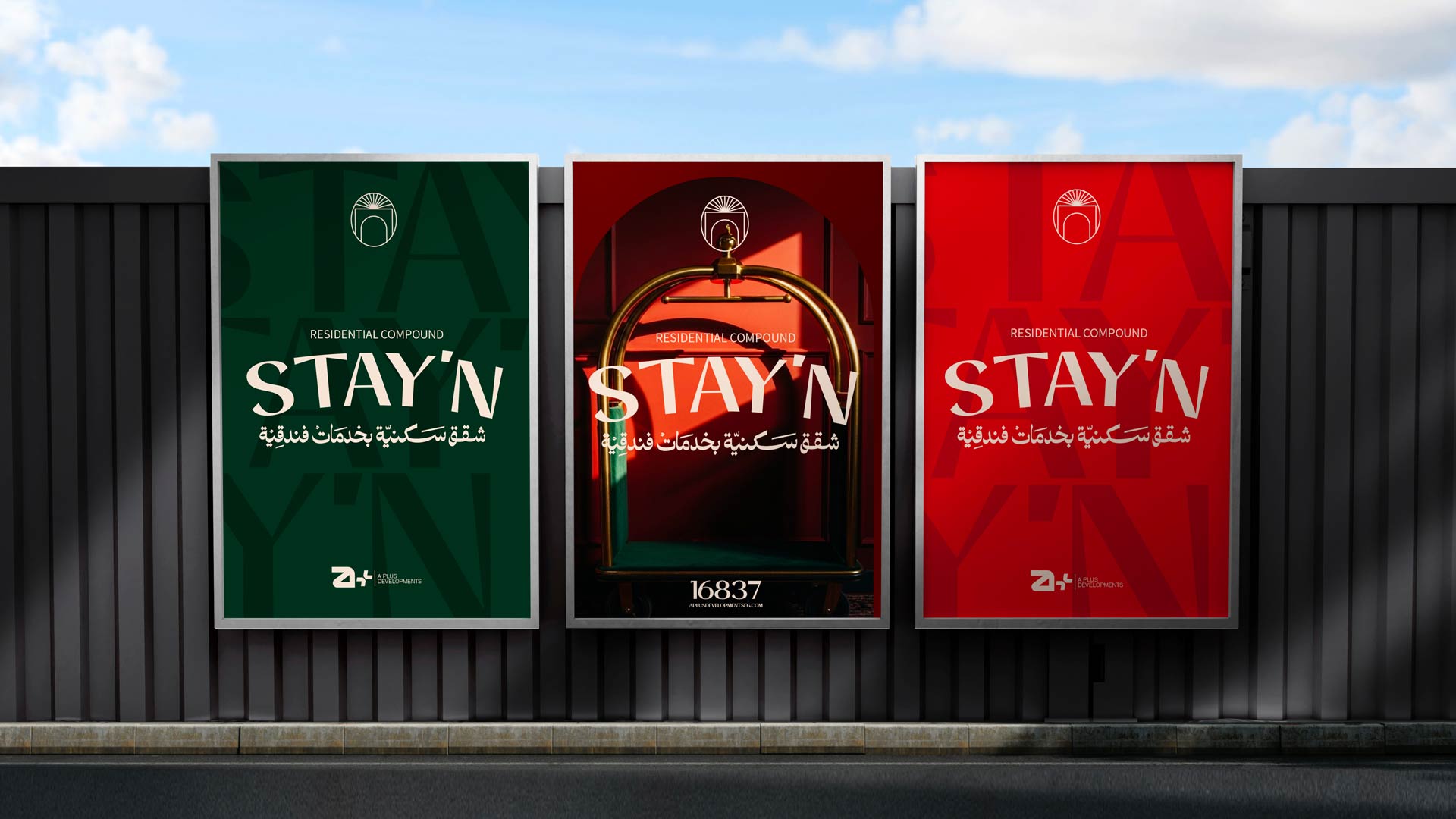
STAY’N, a serviced apartment and retail destination developed by APlus Developments near MSA University, is a useful real-world test of this framework. Built around a youthful living concept for students and young professionals, the project needed a launch approach suited to an audience that scrolls fast and ignores anything that feels corporate — exactly the audience where a phased social media campaign for real estate matters most.
Native Studio’s scope on the project covered project brand strategy, retail integration messaging, the serviced-living model itself, and a youth-focused narrative built to carry through every phase of the campaign — from the first teaser to the ongoing content keeping the development visible to a young, fast-moving audience long after launch day.
 Planning Your Next Launch Campaign?
If you’re preparing a development launch and want a campaign built in phases that actually sustain momentum, Native Studio’s team can walk you through the process.
Chat with Native Studio on WhatsApp | Call the Team
Contact Us Whats AppFAQs About Social Media Campaign for Real Estate
- How long should a social media campaign for real estate run? Most effective launch campaigns run four to eight weeks, covering the teaser, reveal, and momentum phases, with conversion-focused content concentrated in the final two weeks.
- What’s the most commonly skipped phase in a real estate campaign? The post-launch phase. Many developers stop pushing content once the initial wave of inquiries slows, losing momentum with buyers who weren’t ready to act immediately.
- Does a real estate launch campaign replace the need for an ongoing social media presence? No. A campaign is a short-term push layered on top of an ongoing presence — developers who only post during campaigns tend to lose visibility between launches.
- Should paid advertising be spread evenly across a real estate campaign? No. Paid support typically works best concentrated around the reveal and conversion phases, rather than spread evenly across the entire campaign timeline.
- What content works best during the momentum phase of a real estate campaign? Construction updates, answered buyer questions, and urgency-driven messaging like limited-unit availability tend to sustain interest better than repeated generic renders.