Someone hands you a business card. In about three seconds, you’ve decided whether they take their work seriously. That’s the job of business card design: to make the right impression before anyone says a word.
Native Studio is an Egyptian studio designing for founders, developers, and companies across Egypt, the GCC, Europe, and international markets. Here is how we think about business card design, and what separates a card people keep from one that ends up in a drawer.
Why a Business Card Design Still Matters
In a digital world, a card does something a screen can’t. It’s physical, it’s personal, and it sits on a desk after the meeting ends. It’s also one small piece of a bigger system, which is why we design cards alongside the rest of your full branding package rather than as a separate task.
The same thinking carries across every touchpoint, from cards to product packaging design. Our wider branding and design services are built around that consistency.
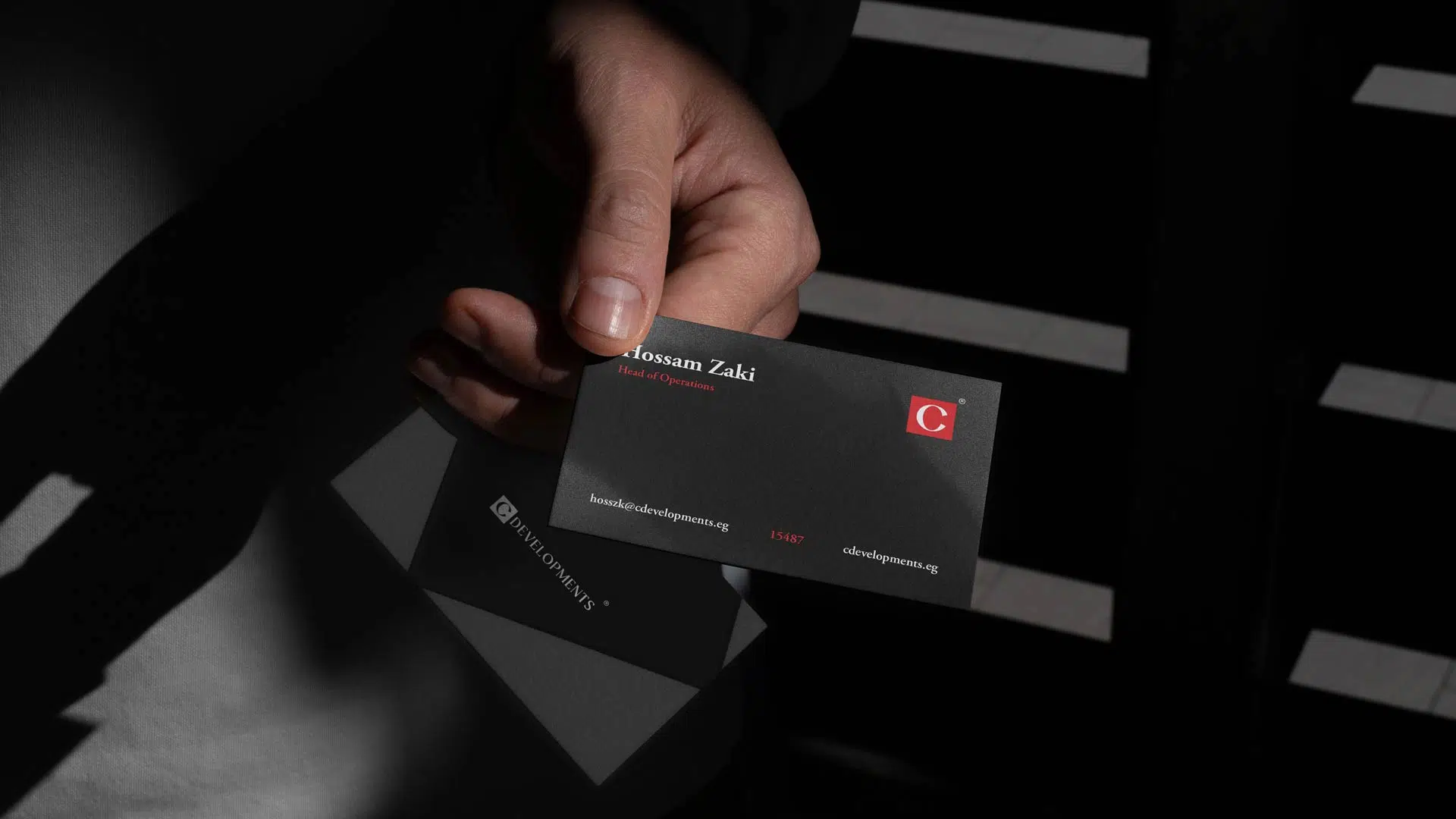
A Real Example: From Cairo Heights to C Developments
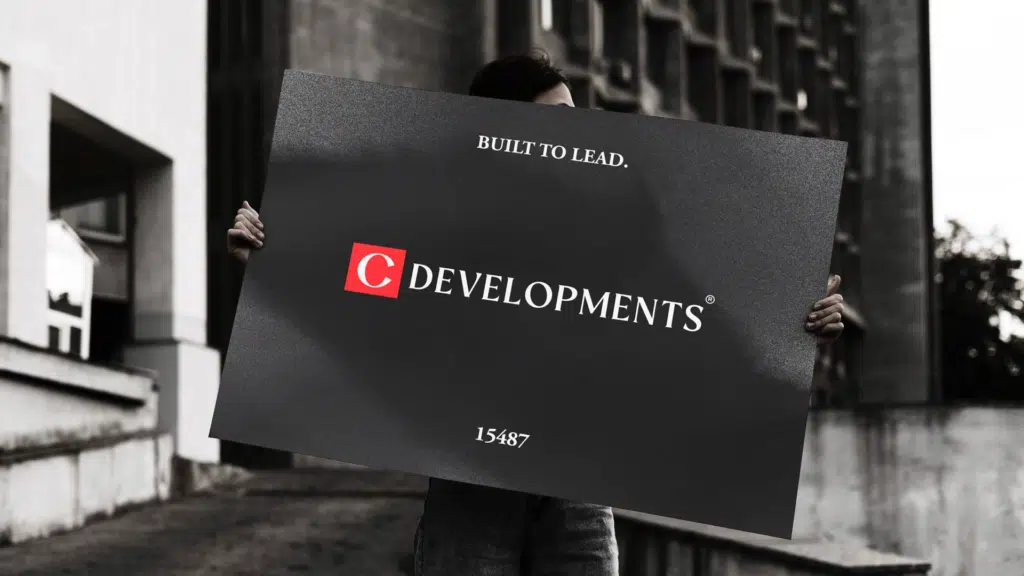
When Cairo Heights Developments shifted toward larger commercial and mixed-use projects, its identity had to grow up with it. We handled the corporate rebranding and the visual identity, and the business card was part of that system.
Why does a card matter in a rebrand? Because it’s often the first physical thing a partner receives. If the identity says “large-scale developer” on the website but the card says “small local firm,” the message breaks.
You can see the full project, including the card in context, on the C Developments project page.
The lesson applies to every business: your card should look like the company you’re becoming, not the one you started as.
 What Goes on a Card (and What Doesn’t)
Less is stronger. In business card design, a clear hierarchy beats a crowded layout every time.
Put on it:
- Your name, large and readable
- Your title and company
- One main way to reach you, plus an email or website
- Your logo, in high resolution
Leave off:
- Fax numbers (they’re no longer relevant)
- Every social handle you own
- Long taglines and paragraphs of text
The back is prime space for one thing only: a short tagline, a second color, or a QR code.
Size, Paper, and Finish
These technical choices determine how your card feels in hand. Because printing setups vary internationally, verify your region’s cut lines with Gelato’s business card size guide before preparing final vector artwork.
|
Choice |
Standard Spec | What to Know |
|
Size |
85 × 55 mm (EU) | 88.9 × 50.8 mm (US) | Set dimensions to match your target market. |
| Bleed | 3 mm on all edges |
Prevents white borders after cutting. |
|
Weight |
300–400 GSM | Anything lighter feels flimsy and cheap. |
| Finish | Matte, uncoated, or soft-touch |
Soft-touch lamination adds 30–50% to print budgets. |
| Effects | Spot UV, foil, embossing |
Adds 40–60%; limit to one key focal detail. |
For digital integrations, use dynamic QR codes so you can update destinations (like portfolios or booking pages) without reprinting. NFC chips are an effective tactile upgrade, but they should complement solid design, never replace it.
Not sure what finish fits your brand? Talk to Native Studio
Contact Us Whats AppOutside Egypt and can’t call or WhatsApp? Fill out our contact form instead.
Arabic and English on One Card
For businesses in Egypt and the Gulf, bilingual business card design is the norm. There are three common layouts:
- One language per side. Clean and simple, with plenty of space.
- Mirrored layout on one side. Efficient, but it needs careful alignment.
- Name in both scripts, details in one. A good middle path.
The key is treating both languages as equals. Arabic and English typefaces should feel like the same family, with matching weight and spacing, not one language squeezed in beside the other.
What Does Business Card Design Cost?
Designing cards on their own is usually a small line item. In a full identity project, the card is typically included as part of the stationery set. Printing is a separate budget, and it changes with quantity, paper, and finishing. For the bigger picture, see our full branding package cost breakdown.
Business Card Design Checklist: Check This Before You Print
- Is every name, number, and email spelled correctly? Proofread twice.
- Is the file set up with 3 mm bleed and a safe margin?
- Is it designed at 300 DPI (never 72)?
- Does the QR code scan on both iPhone and Android?
- Is the smallest text still readable at actual size?
- Does the card match your logo, colors, and website?
Ready for business card design that reflects the company you’re building? As an Egyptian studio, Native Studio works with clients across Egypt, the GCC, Europe, and international markets, wherever you’re building. Book Your Free Strategy Call· Or fill out our contact form
Contact Us Whats AppFAQs About Business Card Design
What makes good business card design?
One clear message, a simple hierarchy, readable type, quality paper, and consistency with the rest of your brand.
What is the standard business card size?
In the US, 3.5 × 2 inches (88.9 × 50.8 mm). In Europe, 85 × 55 mm. Always check your printer's template.
Should I put a QR code on my business card?
Yes, if it leads somewhere useful, such as a portfolio or booking page. Use a dynamic code so you can update the link later.
Do I need to design both sides?
Not required, but the back is valuable space. Use it for one strong element, or for a second language.
Is business card design included in a branding package?
Usually, yes. Cards are part of the stationery set in most full identity projects.