Picture two Egyptian executives walking into the same investor pitch with identical experience. One is already known through their LinkedIn insights and media quotes; the other is a complete stranger. Only one has a personal brand working for them before they speak.
Informed by our strategic work at Native Studio as a premium branding agency, this guide breaks down five personal brand examples from Egyptian executives and founders—and the exact principles you can apply to build your own authority.
Key Takeaways About Personal Brand Examples
- Clarity Beats Fame: Strong personal brand examples prove that being known for a specific point of view or niche expertise matters far more than broad public fame.
- Five Distinct Leadership Archetypes: Egyptian executives and founders build authority through different angles—vocal boldness (Naguib Sawiris), resilient comeback storytelling (Hisham Talaat Moustafa), portable development vision (Samih Sawiris), cross-market specialisation (Maha Abouelenein), and targeted sector credibility.
- People Before Logos: In relationship-driven Egyptian sectors like real estate and B2B services, buyers and investors evaluate the leader before trusting the company brand.
- Consistent Weekly Execution: Defining a one-sentence positioning, optimising LinkedIn, and sharing one sharp weekly insight builds measurable momentum within 3 to 6 months.
What Makes Personal Brand Examples Worth Learning From?
A personal brand is what people say about you when you are not in the room. It is the combination of your reputation, your expertise, your values, and how consistently you communicate all of those things to the world. It is not your job title. It is not your company name. Those describe your role. A personal brand describes who you are as a professional and what you stand for.
The difference between fame and a strong personal brand
Naguib Sawiris is famous. But fame alone is not a personal brand. What makes his personal brand strong is that you know exactly what he stands for, how he thinks, and what to expect from him before he opens his mouth. That clarity is what separates a strong personal brand from just being well known. The executives who benefit most from personal branding in Egypt are often not famous at all. They are simply specific, consistent, and visible in the right circles.
Three things every strong personal brand has in common
- Clear positioning — they are known for something specific, not everything
- Consistency — the same message, tone, and values appear everywhere people encounter them
- Visibility — they show up publicly and regularly, not only when they need something
Mastering these three pillars turns casual recognition into lasting professional authority.
Why Personal Branding Matters for Egyptian Executives Right Now
What happens before you walk into the room
Egypt’s business environment is changing. Investors, clients, and partners now search your name before they meet you. A developer pitching a project, an executive being considered for a board position, a consultant being recommended to a new client — in every case, someone is searching their name before the first meeting. What they find, or do not find, shapes the conversation before it starts.
LinkedIn is growing faster in Egypt than most executives realise
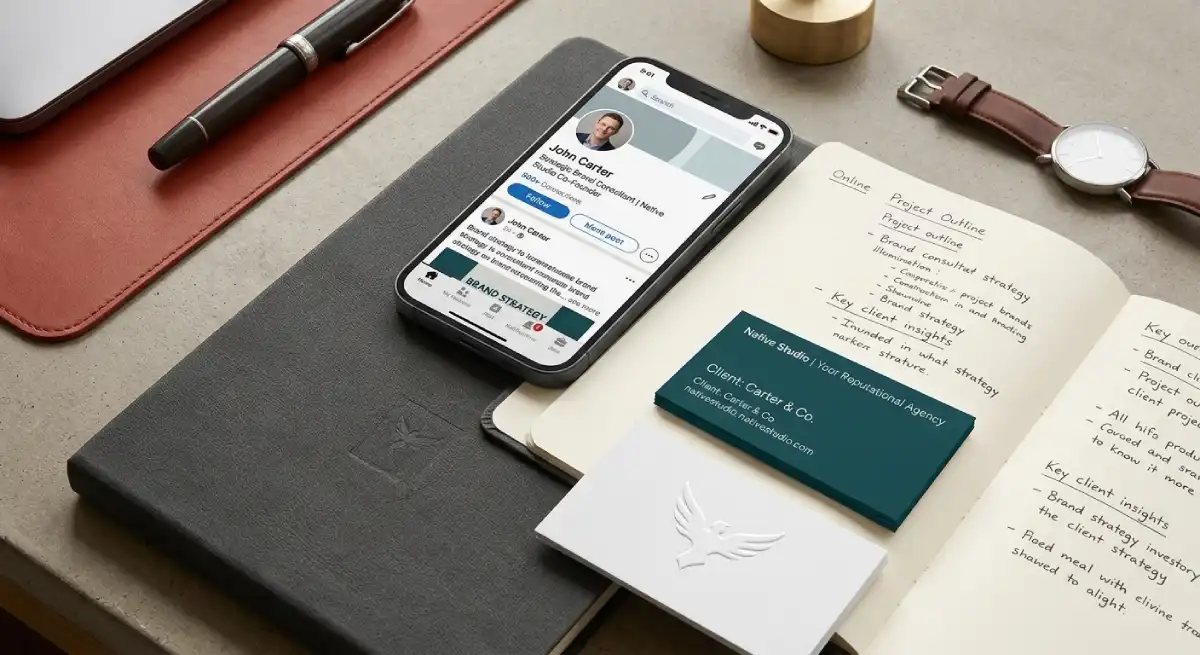
LinkedIn’s active user base in Egypt has grown significantly over the past three years. Egyptian professionals are increasingly using it to make business decisions, validate potential partners, and research executives before meetings. An incomplete LinkedIn profile or an absent one is no longer neutral. It is a missed opportunity at every first impression.
How your personal brand affects your company brand
In property development especially, where deals are built on trust and long-term relationships, effective real estate personal branding matters just as much as the project itself. A buyer is not simply purchasing a unit—they are trusting a leader with one of the most significant financial decisions of their life. That confidence begins with what investors and buyers find about you before ever visiting a sales office, which is why intentional CEO personal branding makes every corporate promise more credible before a single brochure is opened.
5 Egyptian Personal Brand Examples and What You Can Learn From Each
Each example below focuses on one specific lesson. The goal is not to tell you to become these people. It is to show you the principle behind what makes each personal brand work so you can apply it in your own context.
Example 1: Naguib Sawiris — The lesson: boldness is a brand
Naguib Sawiris is one of the most recognizable business personalities in Egypt and across the Arab world. His personal brand is built on one thing: he says exactly what he thinks. On social media, in interviews, in public life — his voice is consistent, direct, and unmistakably his own. Whether you agree with his views or not is beside the point. You always know where he stands.
In a business culture where many executives say very little publicly, he fills a space that nobody else occupies in quite the same way. Boldness in personal branding does not mean being controversial. It means having a clear point of view and being willing to express it consistently.
Example 2: Hisham Talaat Moustafa — The lesson: a comeback is a brand story
Hisham Talaat Moustafa is the CEO of Talaat Moustafa Group, Egypt’s largest listed real estate developer. TMG’s contractual sales reached record levels in recent years, and Forbes Middle East ranked it the top listed real estate company in Egypt. What makes his personal brand remarkable is the story behind the numbers. He served nine years in prison, came out, and rebuilt one of Egypt’s most significant real estate businesses. That story of resilience, accountability, and the capacity to rebuild is now inseparable from his personal brand.
The lesson here is that your story is part of your brand. Executives who have overcome significant challenges often try to hide or minimise those experiences. But difficulty, honestly owned and clearly communicated, builds more trust than a smooth and uninterrupted success narrative.
Example 3: Samih Sawiris — The lesson: a vision is a brand
Samih Sawiris is the founder of Orascom Development Holding, which builds resort towns across Egypt, Oman, Montenegro, and Switzerland. His personal brand is built around a consistent vision — that real estate development should create places worth living in, not just units worth buying. Sustainability, lifestyle, and quality of place are consistent themes across everything he is associated with.
His personal brand is portable. It travels with him across projects, industries, and geographies. When people understand what you believe in, they can follow your work and trust your judgment even in unfamiliar contexts. That portability is the result of a clear and consistently communicated vision.
Example 4: Maha Abouelenein — The lesson: expertise travels across markets
Maha Abouelenein is an Egyptian-American communications expert, author, and speaker who has been recognised as one of the Most Impactful Egyptians and nominated for Forbes’ Power Women of the Middle East. She built her personal brand around one specific area of expertise — helping leaders communicate with clarity and impact across cultures — and has scaled it from boardrooms to stages around the world.
Her book, 7 Rules of Self-Reliance, is a practical extension of her personal brand. Her social media, her speaking, and her coaching programs all reinforce the same message. You can learn more about her approach at mahaabouelenein.com. The lesson: depth in one specific area of expertise, applied consistently across multiple channels, is what builds a personal brand that travels across markets.
Example 5: Anonymized Real Estate Founder (Native Studio Client) — The lesson: quiet authority converts deals
Not every effective personal brand belongs to a household name. Native Studio worked with the founder of a mid-sized Egyptian real estate development company who had strong delivery credentials on the ground, yet almost zero searchable presence online—causing institutional brokers and high-net-worth buyers to hesitate during pre-launch sales.
By defining a clear positioning around architectural execution, rebuilding his LinkedIn presence, and publishing one weekly market perspective over six months, his visibility shifted completely. Brokers began referencing his commentary in investor briefings, and meetings started with established trust rather than cold introductions. The lesson: you do not need national fame to win your sector—you just need to be clearly visible to the decision-makers who matter.
What These Personal Brand Examples Have in Common
Looking across all five examples, each one made one specific decision that made their personal brand work. Taken together they form a clear pattern.
| What they did | The lesson |
| Naguib Sawiris — said exactly what he thought publicly and consistently | Boldness and clarity of voice is a brand in itself |
| Hisham Talaat Moustafa — owned his story including the difficult parts | Authenticity, even about hard moments, builds more trust than a smooth narrative |
| Samih Sawiris — built everything around one consistent vision | A clear vision makes your brand portable across geographies and industries |
| Maha Abouelenein — went deep on one area of expertise for decades | Specialisation is a brand strategy. Depth beats breadth every time |
| Native Studio Real Estate Client — built a focused LinkedIn and thought-leadership presence from scratch | Quiet, targeted authority among decision-makers converts deals without mass fame |
They are specific, not broad
Every example above stands for something clear. Not everything, not nothing — something. Naguib Sawiris stands for directness. Samih Sawiris stands for sustainable luxury living. Maha Abouelenein stands for cross-cultural communication clarity. Specificity is what makes a personal brand memorable. The instinct for most Egyptian executives is to position broadly so they do not miss opportunities. The ones who become genuinely recognized in their field almost always made the opposite choice.
They are consistent, not occasional
The same message, the same tone, the same values appear across every platform and every public appearance. None of them sound different in a business meeting than they do on LinkedIn. Consistency is what turns repeated exposure into recognition over time.
They are visible, not hidden
They show up publicly and regularly, not only when they have something to sell or need something from the market. Visibility is what turns a strong personal brand into a working asset. A brand nobody sees does not exist, regardless of how clear the positioning is.
Personal Brand vs Company Brand — Why You Need Both
People trust people before they trust logos
A company brand is the organisation — its name, its visual identity system, its positioning in the market. A personal brand is the individual behind the organisation. Both are important. When the CEO of a company has a strong personal brand, it builds trust in the company before a potential client or investor ever looks at the company’s materials. People make decisions based on people. The logo comes after.
How the CEO brand and the company brand reinforce each other
In Egypt’s real estate market, this is especially true. A developer can have the best brochure, the best location, and the most competitive price. But if the person making the decision does not trust the developer behind the project, the sale does not happen.
How to Start Building Your Personal Brand This Week
You do not need a large budget or a media team to start. You need clarity and consistency. Here are four things you can do this week.
- Define your positioning in one sentence. What do you want to be known for, by whom, and why does it matter? Be specific. Egyptian real estate development is not positioning. Making commercial real estate accessible to Egyptian SMEs is positioning.
- Optimise your LinkedIn profile. Most Egyptian executives have incomplete profiles — a job title, maybe a photo, nothing else. Add a headline that reflects your positioning, a summary that tells your story, and a professional photo. This takes two hours and creates a permanent first impression.
- Start sharing your thinking publicly. One post per week is enough to build visibility. Share a lesson from a project, an observation about the Egyptian market, a decision you made and why. You do not need to be a writer. You need to be genuine and specific.
- Make your visual identity consistent. Use the same professional photo across LinkedIn, your email signature, and any public profiles. Keep the same tone and language everywhere people encounter you. Consistency turns repeated exposure into recognition.
How Native Studio Builds Personal Brands for Egyptian Executives
Native Studio is a Cairo-based branding studio creating standout personal brand examples and positioning-first brands across all industries, with deep specialization in real estate development.
Our Branding Services
Our branding and executive identity services cover brand strategy, visual identity, corporate rebranding, executive personal branding, investor pitch decks, web UI/UX, social media management, OOH and digital campaigns, brand events, and 2D/3D motion.
Countries We Serve
We operate across 12 countries: Egypt, Saudi Arabia, the UAE, Qatar, the UK, the US, Turkey, Malaysia, Singapore, Indonesia, Australia, and Ghana.
Cross-Industry & Real Estate Projects
While we serve diverse sectors, real estate is our core strength. Selected portfolio projects include Seven Residence (Harby Group), C Developments, EHD (Egyptian Hungarian Developments), Salam Properties, Golden View Developments, Zahwa (APlus Developments), Sumou Gate, and Sharaka Plus. To elevate your leadership brand, contact our team.
 FAQs About Personal Brand Examples
What makes a strong personal brand example in business?
A strong personal brand example is a leader whose public reputation is intentionally built around a clear point of view, consistent values, and proven expertise rather than mere fame. As shown by leaders ranging from Naguib Sawiris to focused sector founders, clarity and consistency make you memorable before you even enter a room.
Do you need mass fame to build an effective personal brand?
No. Most successful executives in Egypt are not public celebrities—they are simply well-known and trusted within their specific industry. Building targeted authority on a single high-intent platform like LinkedIn is far more effective for winning investors, board seats, and enterprise clients than chasing broad public reach.
Why do you need a personal brand if you already have a strong company brand?
Because decision-makers trust people before they trust corporate logos. When a company is well-known, investors, partners, and high-ticket buyers inevitably search for the leader behind it. A credible personal brand reinforces every corporate promise, whereas an absent or incomplete presence creates doubt before the first meeting begins.
What is the difference between personal branding and self-promotion?
Self-promotion focuses on announcing personal wins and awards, while personal branding focuses on sharing useful industry insights, real operational lessons, and a clear point of view. When your perspective helps clients and peers think more clearly about market challenges, you build lasting authority without ever sounding promotional.
How long does it take for personal branding to show measurable results?
With consistent weekly publishing and an optimised LinkedIn profile, most Egyptian executives see early traction—such as warmer investor meetings, inbound peer messages, and speaking invitations—within three to six months. Becoming a widely recognised authority in your sector typically takes one to two years of steady execution.
To Summaries The Personal Brand Examples
The best time to build your personal brand was five years ago. The second best time is now. Every executive in this article started somewhere. Naguib Sawiris built his voice over decades of public life. The Native Studio client we worked with started with almost zero personal visibility and changed that within six months through a clear strategy applied consistently.
What they all have in common is a deliberate decision—to shape how the market perceives them rather than leaving their reputation to chance. In Egypt’s relationship-driven business environment, investing in personal branding for executives is one of the highest-leverage moves a senior leader can make.