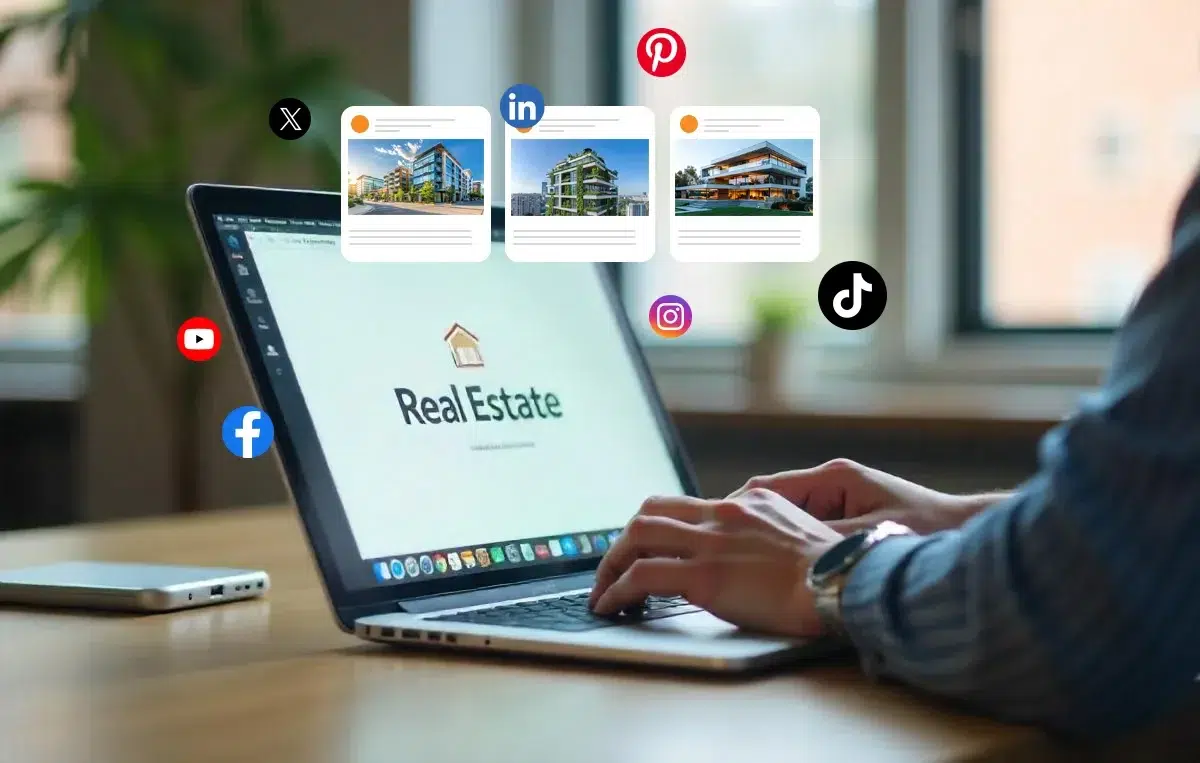
Scroll through the Instagram accounts of ten different real estate developers, and they look identical: drone shots of rendered facades, generic “luxury living” captions, and repetitive amenity icons. However, a high-consideration purchase like property requires more than pretty renders—it demands a strategic framework built on trust, proof, and clear buyer journeys.
A successful real estate social media strategy moves a prospect from “I saw a nice render” all the way to “I booked a site visit.”
Why Most Real Estate Social Media Strategy Fails to Convert
The common failure point isn’t a lack of posting volume—it’s treating real estate like a low-involvement consumer product. Executing campaigns without a structured real estate social media strategy leaves followers unclear on the next step. Content falls flat when it relies solely on generic promises rather than:
- Proof Over Promises: Real construction updates, site walkthroughs, and time-lapses build far more credibility than another rendered lobby shot.
- Buyer Education: Assisting clients with financing insights, payment plan structures, and area growth trends establishes market authority.
- Humanized Connection: Featuring leadership, founders, and sales teams creates personal accountability and trust for high-value investment decisions.
The Core Framework: Mapping Content to the Buyer Journey
An effective real estate social media strategy categorizes content into three distinct stages rather than pushing for a direct sales lead in every post:
- Awareness (Early-Stage): Focuses on location, lifestyle storytelling, and community development to showcase what living or working in the project actually feels like.
- Consideration (Mid-Stage): Delivers clarity on payment plan highlights (down payments, installment years), unit layouts, 3D animated walkthroughs, and amenity deep-dives.
- Decision & Conversion (Late-Stage): Leverages real construction progress, buyer testimonials, limited-unit availability updates, and direct sales-ready CTAs (e.g., WhatsApp inquiries or site visit bookings).
Flexibility Built on Core Fundamentals
While our real estate social media strategy framework relies on non-negotiable fundamentals—such as multi-channel brand consistency, journey-mapped content, and transparent proof—we recognize that no two developments are identical. Whether launch phase, target demographic, or market location (from New Cairo to Dubai or London), our approach adapts dynamically. We customize content ratios, tone, and campaign funnels to fit each project’s unique sales velocity while keeping core brand integrity intact.
The Value of Multi-Touchpoint Brand Consistency
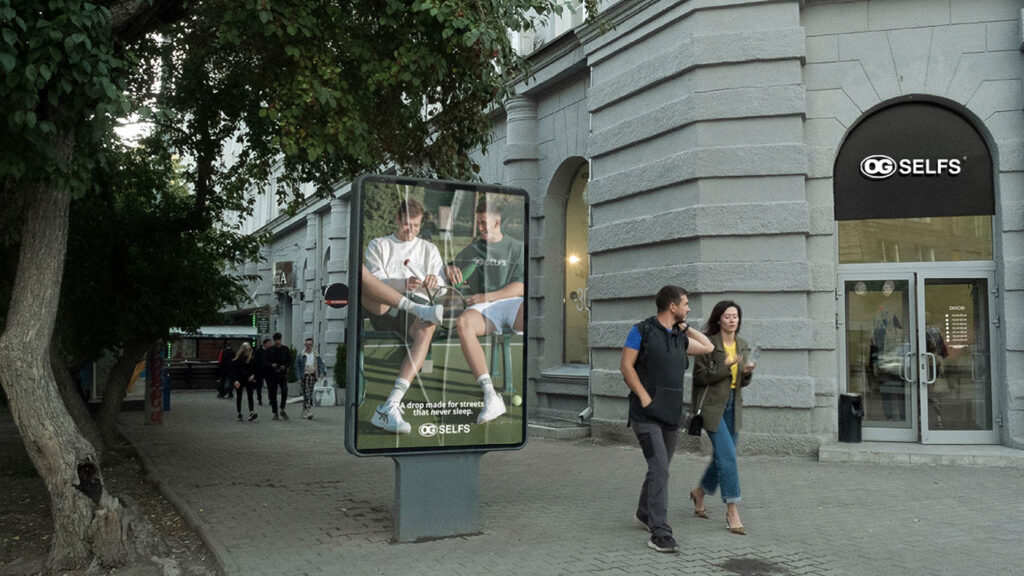
Social media rarely works in isolation. A high-converting real estate social media strategy links digital content directly with OOH highway billboards, digital ad campaigns, and sales gallery collateral. When a prospective buyer sees the same visual identity, typography, and messaging whether scrolling on their phone, driving past a billboard, or sitting in a sales meeting, brand credibility grows significantly.
 Connecting Social Media to Real Estate Growth: The Native Studio Approach
At Native Studio, we view social channels not as isolated posting platforms, but as the primary digital gateway where a buyer’s trust is either won or lost. Our team bridges the gap between high-level brand architecture and daily execution to deliver a tailored real estate social media strategy.
Having engineered visual identity systems and multi-channel launch campaigns for leading developers—including C Developments, EHD, Salam Properties, APlus, and Golden View—we understand how high-consideration buyers interact with real estate content. We transform static renderings and project masterplans into interactive 3D motion, transparent construction updates, and high-converting campaign funnels.
With deep experience across diverse property markets—from Egypt and the GCC (Saudi Arabia, Qatar, UAE) to the UK, Turkey, Southeast Asia, and Australia—Native Studio builds social media ecosystems tailored to local buyer psychology, ensuring every reel, story, and ad directly supports your sales floor.
Ready to Build a Social Media Strategy That Converts?
Move your digital presence beyond static content calendars. Connect with Native Studio to build a high-converting real estate social media strategy tailored to your growth.
Contact Us Whats App