

In an oversaturated commercial environment, the human brain relies on rapid visual filtering to navigate cognitive overload. Consumers do not read corporations; they decode them. A corporate visual identity system is not an accumulation of aesthetic preferences or a superficial graphic layer applied to an enterprise. It is a highly engineered, semiotic infrastructure designed to trigger predictable psychological, neurological, and behavioral responses.
When executed with strategic precision, a visual identity system acts as a non-verbal narrative of stability, market scale, and absolute operational competence. This guide provides an exhaustive blueprint of how design psychology, geometric composition, and color theory converge to construct permanent corporate authority across local and international markets.
1. The Architecture of Systemic Visual Identity
A critical point of failure for expanding corporations is treating brand assets as isolated, decorative elements. A logo designed in isolation from a typographic system, or a color palette selected without consideration for digital screen rendering, inevitably fractures market perception.
Shifting from Graphic Design to Systemic Design
Traditional graphic design seeks to solve immediate visual problems, such as designing a single brochure or layout. Systemic visual identity architecture, however, engineers an open-loop ecosystem of modular assets that maintain absolute structural coherence across infinite applications.
[Core Strategy] ──> [Mathematical Grid System] ──> [Modular Visual Assets]
                                                        │
         ┌───────────────────┬──────────────────────────┴─────────────────────┐
         ▼                   ▼                                                ▼
[Digital Viewports]   [Physical Spaces]                              [Corporate Assets]
(UI/UX Architecture)  (Experiential Events)                          (Presentations & Decks)
The system must balance two opposing forces: Rigidity and Flexibility. Rigidity ensures that core brand identifiers (such as primary geometric ratios and exact color values) remain completely unalterable across all touchpoints. Flexibility allows the visual assets to expand, contract, and adapt natively to distinct media, whether rendered as an animation, embedded in an enterprise application, or fabricated as physical signage for corporate events.
To transition from disjointed marketing visuals to a cohesive market presence, enterprise organizations must base their visual frameworks on a disciplined, comprehensive Branding & Strategy model that ties brand assets directly to long-term commercial goals.
2. Design Psychology and Cognitive Processing Models
To construct an authoritative visual system, designers and corporate strategists must understand how the human eye and brain interpret visual stimuli. Human visual perception is governed by predictable cognitive shortcuts designed to minimize energy expenditure.
Gestalt Principles of Visual Perception
Gestalt psychology demonstrates that the human mind perceives visual elements as organized wholes rather than a collection of disparate parts. A masterfully engineered identity system leverages these principles to encode complex corporate narratives into clean visual structures:
-
The Principle of Closure: The brain naturally fills in missing structural information to perceive a complete shape. Utilizing closure in logo design creates high cognitive engagement, forcing the viewer’s mind to actively participate in decoding the brand asset.
-
The Principle of Proximity: Visual elements positioned close to one another are automatically perceived as a unified collective share or a functional unit. This principle dictates how content hierarchies, data graphics, and interface layouts must be structured to prevent user confusion.
-
The Principle of Continuity: The human eye naturally follows lines, curves, and vectors. Aligning key brand elements along predictable visual trajectories guides the viewer’s eye directly to high-conversion text blocks or critical data indicators.
Cognitive Load Optimization
An authoritative corporate identity lowers the viewer’s cognitive load. If a prospective B2B buyer is forced to expend mental energy trying to decipher a chaotic layout, an illegible font, or a cluttered logo mark, they experience subconscious frustration. This frustration is instantly projected onto the company’s operational capability. Clear, mathematically balanced visual identity systems imply clear, highly efficient business operations.
3. The Anatomy of Enterprise Logo Creation
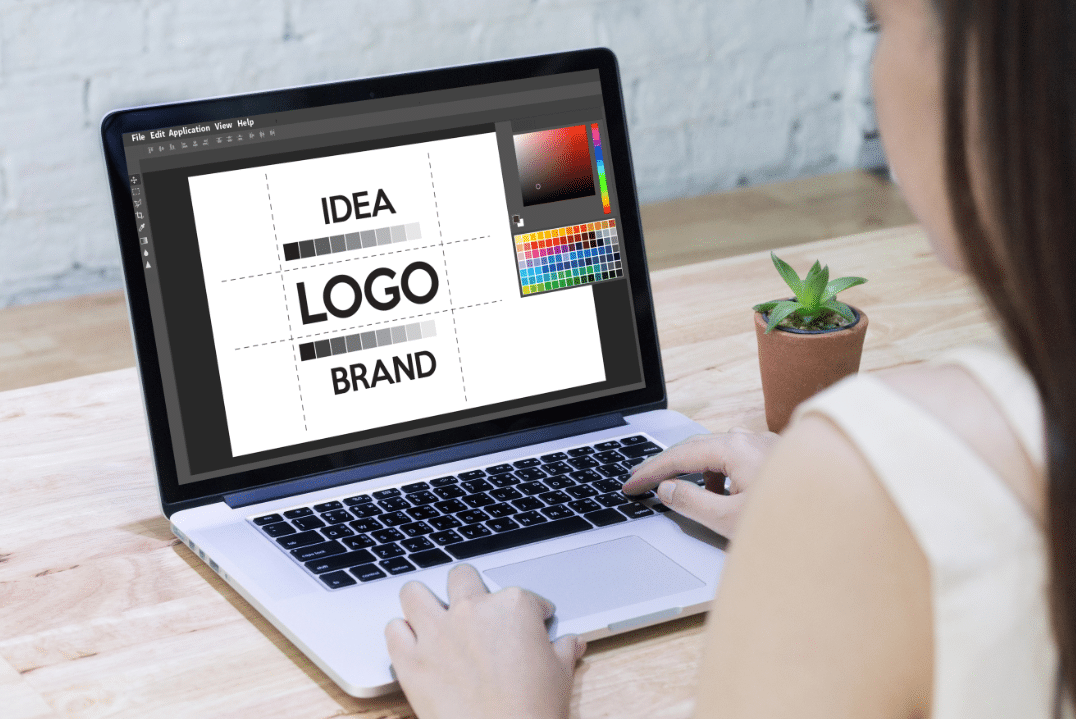 A corporate logo is the most heavily distilled asset within a visual identity system. It operates as a psychological anchor for all brand associations. When a multinational corporation or high-growth startup engages in market expansion, the structural anatomy of the corporate market determines its long-term viability.
Geometric Structuralism and Grid System Foundations
Authoritative logos are never sketched entirely freehand; they are mathematically constructed on rigorous grid matrices utilizing precise geometric forms, such as circles, squares, and equilateral triangles.
+---------------------------------------+
|  [Outer Bounding Box: Golden Ratio]   |
|                                       |
|      ( ) Intersecting Geometry        |
|      / \ Mathematical Vectors         |
|                                       |
|  [Strict Baseline Grid Alignment]     |
+---------------------------------------+
Using the Golden Ratio ($1:1.618$) inside the bounding boxes of a logo creates natural visual balance that the human eye instinctively recognizes as harmonious. This mathematical precision protects the mark from looking dated as design trends evolve, anchoring it as a classic asset.
Scalability and Multi-Platform Performance
A corporate mark must be engineered to maintain structural integrity across vastly different scales. It must perform flawlessly under the most brutal technical constraints:
-
Micro-Scale Optimization: The mark must remain instantly identifiable when reduced to a 16-pixel digital favicon or compressed inside a mobile application header.
-
Macro-Scale Execution: The asset must retain its geometric perfection and visual weight when projected across massive exhibition backdrops, physical real estate developments, or vehicle wraps.
To achieve this level of cross-platform utility, corporations must move away from complex, illustrative compositions and invest in a pure Logo Creation process that prioritizes stark geometric clarity and high-contrast functionality.
4. Chromatic Strategy and Corporate Behavioral Color Theory
Color selection is the most immediate tool for emotional and behavioral engineering within a visual identity system. Before a viewer processes the name of a corporation or decodes its logo geometry, their subconscious mind has already categorized the company based on its chromatic profile.
The Corporate Chromatic Application Matrix
A dominant color architecture relies on an intentional distribution of visual weight. The system must utilize a Primary Dominant Tone (60% of brand real estate), a Secondary Supporting Tone (30%), and a High-Contrast Accent Tone (10%).
| Color Spectrum | Cognitive & Psychological Associations | Strategic Enterprise Vertical |
| Deep Obsidian / Onyx Black | Uncompromising prestige, structural authority, institutional legacy, high-end exclusivity | Tier-one corporate advisory, luxury development, investment banking |
| Titanium Blue / Deep Cobalt | Systemic stability, analytical precision, institutional trust, corporate governance | Enterprise SaaS platforms, financial institutions, and global logistics |
| Forest Emerald / Sage Green | Sustainable capital growth, ecological stewardship, renewal, and physical wellness | Asset management firms, clean-tech infrastructures, and healthcare groups |
| Burnt Ochre / Terracotta | Terrestrial stability, organic reliability, warmth, and historical depth | Premium real estate development, boutique hospitality, cultural institutions |
Technical Chromatic Engineering
A color palette must be calibrated to maintain absolute uniformity across physical and digital spaces. This requires defining precise mathematical values across distinct color profiles:
-
HEX & RGB Profiles: Calibrated for light-emitting digital viewports, ensuring color vibrancy remains consistent across OLED, LCD, and mobile screen variations.
-
CMYK Profiles: Calibrated for standard four-color ink printing processes, eliminating unexpected color shifts on corporate stationery, annual reports, and physical marketing material.
-
Pantone Matching System (PMS): Explicitly specified for large-scale physical manufacturing, architectural fabrication, and uniform corporate merchandising where color deviation is completely unacceptable.
5. Typographic Systems and Hierarchy
Typography is the voice of the brand made visible. It is the vehicle through which complex data, corporate narratives, and commercial offers are consumed. A broken typographic system dilutes the authority of the finest written content.
The Dual-Typeface Rule
An enterprise-grade visual identity system restricts its typographic vocabulary to a maximum of two distinct font families:
-
The Primary Display Typeface: Used exclusively for primary headings (H1, H2). This font carries the stylistic personality of the brand. It projects structural confidence, using intentional kerning (the spacing between individual characters) and strong stroke weights to command immediate attention.
-
The Secondary Body Typeface: Engineered entirely for long-form legibility across print and digital screens. This font family must be highly neutral, possessing an extensive weight range (Thin, Light, Regular, Medium, Semibold, Bold) to allow for complex content layout without causing visual fatigue.
[Display Typeface: Strong Stroke Weight] ──> Commands Visual Attention
     │
     ▼
[Body Typeface: Neutral, High Legibility] ──> Reduces Cognitive Reading Friction
Typographic Math and Proportions
To maintain a clear visual hierarchy, typographic scales should follow geometric progressions. For instance, utilizing a scaling factor of 1.414 (the Silver Ratio) ensures that your headings, subheadings, and body text maintain a consistent, mathematically balanced contrast across all corporate documentation and digital layouts.
6. Digital Optimization, Core Web Vitals, and UI/UX Integration
 In the modern commercial landscape, a visual identity system is validated or destroyed by its digital execution. A premium brand identity system that is poorly integrated into a digital user interface causes immediate brand devaluation.
Translating Brand Aesthetics into High-Performance UI/UX
User Experience (UX) design is the strategic bridge that turns a brand’s visual vocabulary into functional digital interactions. When an enterprise deploys its brand style across web platforms, it must prioritize clear, intuitive information architecture:
-
Frictionless Spatial Mapping: Organizing user interfaces so that corporate whitepapers, service offerings, and contact nodes are positioned exactly where an enterprise buyer expects them.
-
Dynamic Micro-Interactions: Utilizing subtle, purposeful animated transitions when users interact with navigation elements or buttons, reinforcing a sense of premium precision.
-
Asynchronous Graphic Loading: Optimizing visual assets so that SVG logo systems, custom iconography, and high-resolution brand visuals render instantaneously without stalling the user workflow.
To transform digital properties into highly optimized conversion assets, companies must integrate their brand guidelines directly into high-performance digital environments by leveraging advanced Websites Development & UI/UX architectures optimized for speed and user retention.
Structural Performance as a Brand Signal
Search engines and modern users view technical performance as a metric of corporate capability. A slow, shifting website implies internal organizational inefficiency. Digital architectures must be continuously monitored against strict web vital targets:
-
Time to First Byte (TTFB): Maintained below 200ms through high-tier server-side caching and premium hosting ecosystems.
-
Largest Contentful Paint (LCP): Ensuring the primary visual identity assets on a viewport render fully within 2.5 seconds of the initial user request.
-
Cumulative Layout Shift (CLS): Keeping layout shifts at a strict score of 0 to eliminate jarring structural movements while users absorb technical data or navigate service pages.
7. Comprehensive Search and Semantic Optimization Framework (FAQs)
To ensure this visual identity blueprint dominates modern search engine rankings, conversational AI layers, and semantic indexing systems, we resolve the exact questions most frequently searched by industry executives and creative directors.
What is the difference between a brand identity and a visual identity system?
Brand identity is the complete strategic, emotional, and operational core of an organization, encompassing its positioning statement, core values, brand voice, corporate culture, and market promise. A visual identity system is the tangible, visible manifestation of that strategy. It translates the abstract pillars of the brand identity into concrete visual assets, including logo geometry, chromatic systems, typography, and layout rules.
How does design psychology directly impact enterprise conversion rates?
Design psychology optimizes conversion rates by systematically eliminating cognitive friction along the user journey. By leveraging Gestalt principles, clear typographic hierarchies, and intentional color systems, a visual identity system guides the viewer’s eye naturally toward high-value corporate conversion points. This structured layout reduces bounce rates, increases digital dwell time, and builds institutional trust, which directly drives higher close rates on enterprise contracts.
What is the asset composition of a complete corporate visual identity style guide?
A comprehensive visual style guide must contain exhaustive documentation regarding:
-
Core logo construction grids, clear space parameters, and forbidden placement variations.
-
Complete primary, secondary, and accent color codes across HEX, RGB, CMYK, and Pantone systems.
-
Typographic typefaces, weight designations, and exact line-height and kerning rules for digital and print.
-
Digital user interface (UI) asset kits, containing custom iconography systems, button styles, and grid layouts.
-
Photographic direction and motion graphic guidelines that dictate the composition, tone, and pacing of all corporate video assets.
Why must corporations avoid trendy design styles when architecting a visual identity?
Design trends are highly cyclical and typically age rapidly, often becoming obsolete within 12 to 18 months. Aligning a corporate identity with a temporary trend forces an enterprise into frequent re-design cycles, which fractures brand recognition and dilutes long-term equity. Authoritative visual identities rely on timeless geometric structuralism and balanced typography, ensuring the brand system remains impactful and relevant for decades.
How do custom vector graphics and animations improve organic search engine rankings?
Custom vector graphics (SVGs) and animations improve SEO performance by drastically reducing page weights compared to heavy, generic image formats. Furthermore, rich visual storytelling assets increase user dwell time—the duration a visitor stays engaged on a page. Search engine algorithms interpret high dwell times as a direct signal of deep, high-value content quality, which boosts the organic ranking of the corporate platform.
What is the impact of responsive typography on cross-device brand consistency?
Responsive typography ensures that the mathematical proportions and hierarchy of your typefaces adjust fluidly to any screen size. Without responsive engineering, an authoritative heading that looks pristine on a desktop monitor can break into awkward, illegible text strings on a mobile screen. Implementing fluid typographic scales allows an enterprise to maintain its commanding visual presence across all viewports.
How does an organization execute a visual identity transition during a public corporate rebrand?
A visual transition must be deployed symmetrically across all internal and external communication channels. The process begins with an internal alignment phase, ensuring all staff have access to the updated asset portal. Externally, the new identity system is launched alongside a clear corporate narrative explaining the strategic vision behind the evolution. All digital properties, social channels, physical properties, and sales decks must switch to the new style simultaneously to prevent market confusion.
Why is an independent iconography system essential for enterprise SaaS platforms?
Enterprise software platforms handle massive amounts of complex data. A custom, cohesive iconography system acts as a non-verbal visual shorthand, translating technical workflows into intuitive, recognizable symbols. This custom system lowers user onboarding friction, improves app navigation speed, and differentiates the software interface from competitors who rely on generic, open-source icon packs.
How can a visual identity system protect a company against trademark infringements?
A visual identity system rooted in unique, mathematically constructed geometry and custom typographic styling provides a much higher level of legal protectability. Generic shapes and common layout styles are difficult to trademark and easy for competitors to copy. By engineering highly specific, proprietary visual identifiers, an enterprise can secure strong intellectual property protections and defend its market real estate.
How often should a corporation audit its visual identity system for systemic drift?
An enterprise should conduct a formal visual identity audit every 12 to 24 months. Over time, decentralized marketing units, regional offices, and external partners inevitably introduce unauthorized font variations, off-brand color tones, and non-compliant layouts. A systematic audit identifies these inconsistencies, allowing corporate governance teams to clean up the assets and secure absolute alignment across the entire global footprint.
8. Strategic Realization – The Native Studio Framework
Building a visual identity system that commands market authority requires an execution partner who balances creative artistry with rigorous technical systems. Native Studio engineers unified visual ecosystems for market-leading enterprises across Egypt and the GCC, turning abstract corporate strategies into unmistakable visual power.
Benefits of Our Service
Partnering with Native Studio introduces a disciplined, scientific approach to your organization’s visual assets:
-
Instant Institutional Trust: We replace amateur, unaligned visual assets with a commanding, geometrically precise aesthetic that signals massive corporate scale to enterprise procurement boards.
-
Flawless Performance Across Media: Our visual systems perform with absolute technical precision, ensuring your identity systems look stunning on a high-stakes investor pitch deck, a mobile application interface, or a physical exhibition pavilion.
-
Total Brand Consistency: We deliver exhaustive, cloud-accessible digital style guides that empower your global marketing units to deploy brand assets with zero stylistic deviation.
-
Maximum Organic Visibility: By optimizing all visual components, iconography assets, and animation layers for modern core web vitals, we accelerate your digital platform’s speed and organic search rankings.
Why Us: The Native Studio Advantage
Traditional design agencies approach corporate branding as a subjective art project. Native Studio redefines the process by treating visual identity as an exact science.
-
The Intersection of Creative Artistry and Technical Systems: We deploy elite visual designers alongside senior front-end engineers. This cross-functional framework ensures that every bold creative choice we make is backed by lightning-fast code, seamless UI/UX execution, and perfect digital accessibility.
-
Deep Regional and International Expertise: Operating out of Egypt while serving high-value clients across the GCC, we understand how to navigate regional cultural nuances while maintaining world-class enterprise standards.
-
Comprehensive Project Lifecycle Execution: We manage the entire lifecycle of your corporate image. From the foundational competitive analysis to advanced logo development, custom Content & Animation pipelines, and enterprise-grade web development, your brand architecture is guided by a single team.
Move Toward Absolute Market Authority
Do not allow an outdated, disorganized visual presence to compromise your firm’s commercial capabilities. While lagging competitors rely on temporary design trends, market leaders invest in permanent visual infrastructure. Your visual identity system is the immediate face of your corporate competence; it must be engineered to dominate.
Establish a direct consultation line with our senior identity architects today to audit your current brand assets, map out strategic visual gaps, and build a high-performance visual system designed for scale.
Connect with our central engagement team in Egypt to initiate your transformation:
-
Corporate Consultation Hotlines: 01144449734
-
International Direct Routing: +20 114 444 9734